
Solar Hot Water / Solar thermal
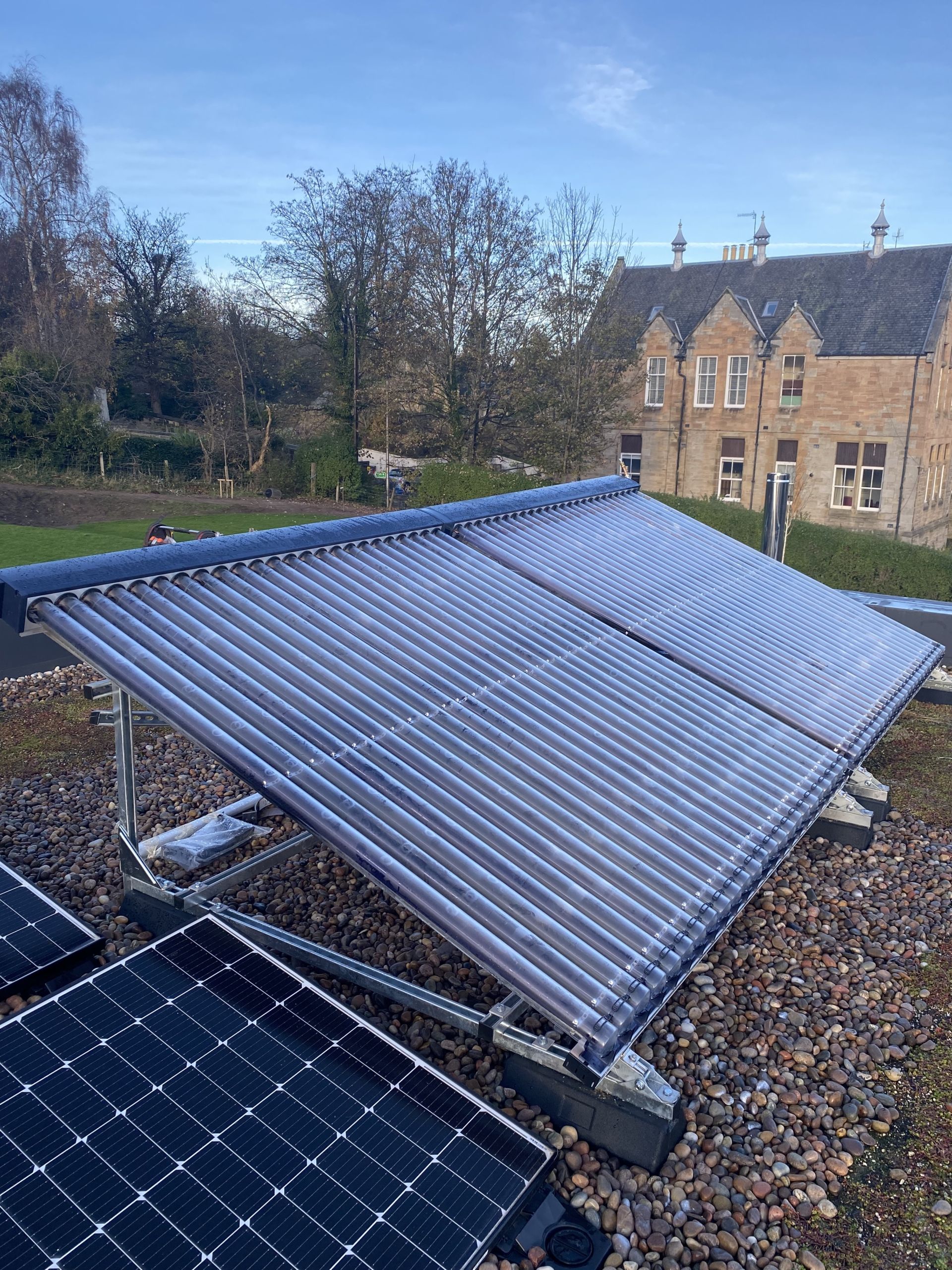
Solar Thermal
A Natural, Efficient Source of Hot Water and Heat
Solar thermal uses the sun’s energy to heat water or heat‑transfer fluid inside flat‑plate collectors or evacuated tubes. Mounted on a south‑facing roof, these collectors warm the fluid, and when the collector becomes hotter than the cylinder or thermal store, a controller activates a small pump to move that heat into the tank. As long as sunlight hits the collector, the process continues.
Solar thermal uses very little electricity, making it one of the most efficient and cost‑effective renewable technologies available. Although often overlooked in the UK due to limited government support, a well‑designed system can provide most of your domestic hot water in the sunnier months and significantly reduce running costs throughout the year.
Types of Solar Thermal Collectors
- Flat‑plate collectors — simple, robust and cost‑effective; copper pipes absorb heat and transfer it to the cylinder or tank.
- Evacuated tube collectors — highly efficient glass tubes with sealed copper heat pipes; ideal for cooler climates and include mechanical overheat protection.
Solar thermal can also operate off‑grid, using natural thermosyphon circulation instead of pumps or controls.
What Can Solar Thermal Heat?
Traditionally, solar thermal heats an indirect coil in a domestic hot‑water cylinder. At Gondwana Green Heat, most of our systems connect to buffer tanks or thermal stores, allowing solar energy to support:
- Domestic hot water
- Space heating
- Hybrid systems with heat pumps, biomass or stoves
- Year‑round energy capture whenever the sun shines
Solar Thermal Works With All Our Heating Systems
Solar thermal is fully compatible with every heating technology we supply and install. Because it feeds directly into cylinders, buffer tanks and thermal stores, it integrates seamlessly with:
- Pellet stoves
- Pellet boilers
- Heat pumps
- Biomass boilers
- Wood‑burning boiler stoves
- Thermal stores
This makes solar thermal one of the most flexible renewable technologies available — reducing running costs, improving efficiency and lowering the load on heat pumps, pellet systems and biomass boilers.
Solar Thermal + Heat Pumps: Modern Hybrid Systems
Solar thermal becomes even more powerful when paired with a high‑efficiency heat pump. In our hybrid systems, solar thermal provides free hot water and contributes to space heating whenever the sun is available, while the heat pump covers the remaining load.
This combination offers:
- Lower running costs
- Reduced electrical consumption
- Higher overall system efficiency
- Smaller heat pumps (because solar does part of the work)
- More stable year‑round performance
Hybrid systems are ideal for homes wanting low‑carbon heating without relying on a single technology.
Can Solar Thermal Heat a Whole Home?
Yes — and it’s already common across mainland Europe. This approach is known as Sonnenhaus (“Sun House”). A Sonnenhaus system uses:
- A very large thermal store (typically 10,000–20,000 litres per house)
- A large solar thermal array (roughly 1 m² of collector per 700 litres of storage)
- A high‑performance building fabric, usually to Passivhaus or similar standards
The solar array charges the thermal store during the sunnier months, and the stored energy provides space heating and hot water throughout the year.
While Sonnenhaus is possible in the UK, most homes benefit more from a smaller thermal store combined with solar thermal and a small heat pump or pellet stove. The combinations are flexible — and highly effective.
Supply • Design • Install • Repair • Commission • Consultancy
If you’d like to explore how solar thermal or a solar‑heat‑pump hybrid could work for your home, we’re here to help.
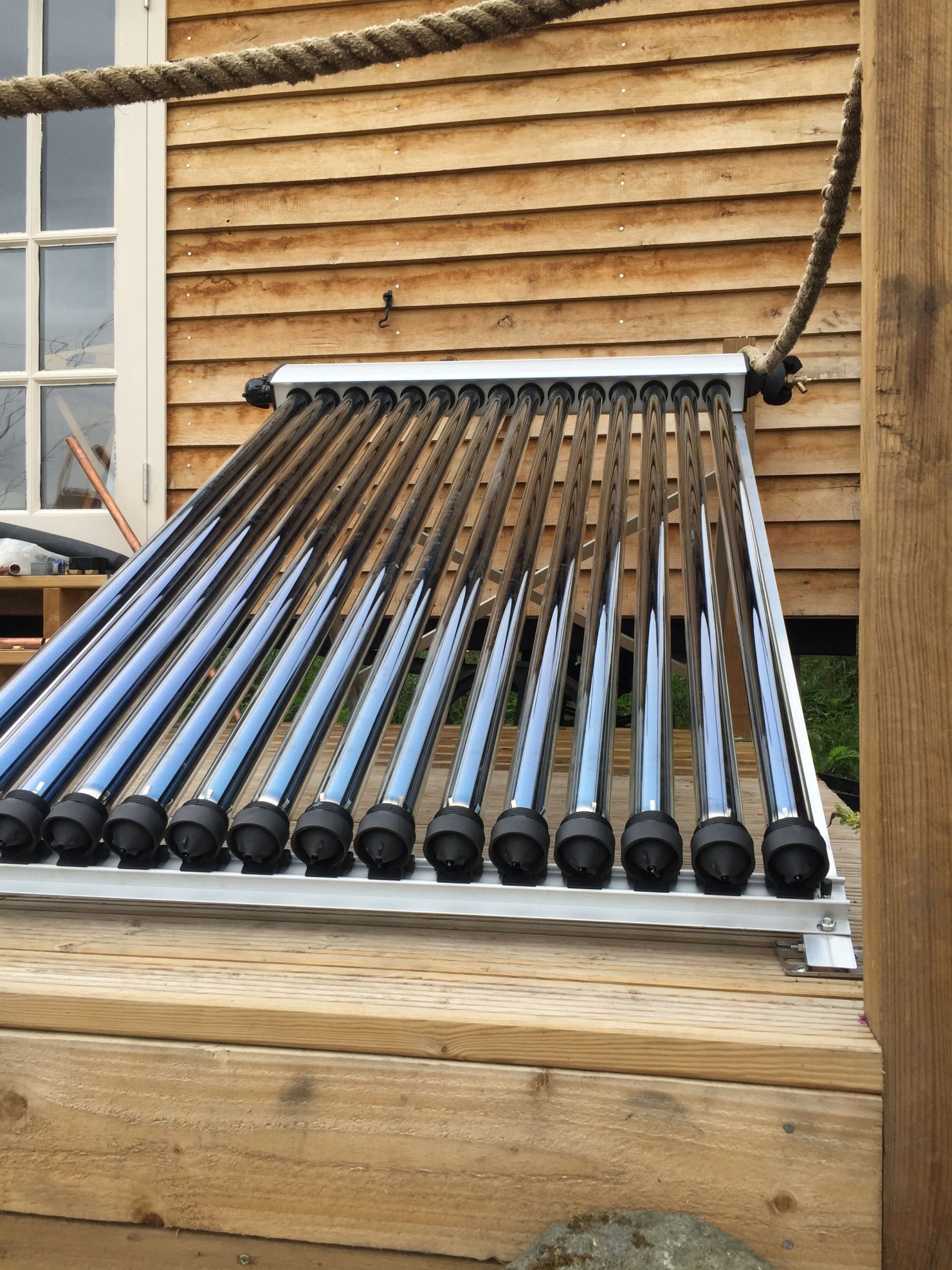
A evacuated solar thermal panel, coupled with a wood burning boiler stove, this system has no controls or pump, the water simply thermo-shyphines naturally. A true off grid solution.


