We are forever having conversations about firewood, and we are always amazed by the theories people come out with. Only yesterday, at the home of a potential customer with a small ash plantation, we were told that ash can be burned wet. When we asked what gave ash these magical properties, the answer was: it's true, I read it online.
Who makes these theories up? Frankly, it does not matter. What matters is that you burn firewood with a moisture content of no more than 20%.
How to test your logs
Take a log you think is ready to burn. Split it down the grain, and use a moisture meter on the freshly split core. If it reads 20% or lower, it is fit to burn. Different woods, with different densities, dry at different rates, and a large chunk takes longer to dry than a smaller split piece.
Why dry wood matters
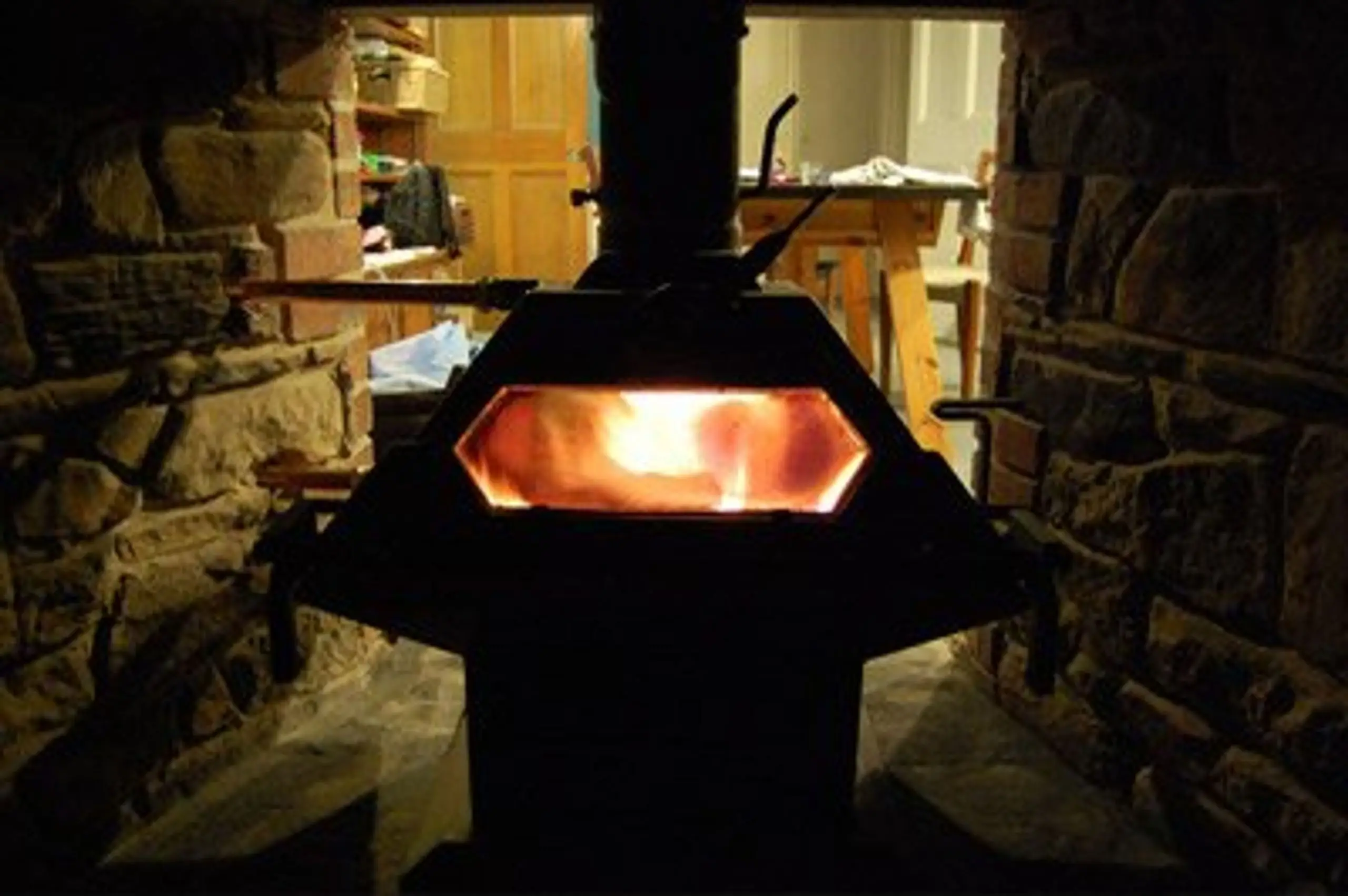
The moisture in wood is simply water. When the wood burns, that water is turned to steam, which goes up the chimney. Too much water means too much steam, which cools the fire in the firebox and lowers the flue gas temperature. That has several effects:
- A cooler firebox means less heat into the room, or into the boiler — you are drying the wood in the firebox instead of turning it into heat.
- Dirty glass, and tar building up inside the appliance and the chimney, which shortens the life of both and reduces efficiency.
- A greater chance of a chimney fire, which is caused by that tar. A chimney fire drastically shortens the life of a chimney.
- Lower firebox temperatures burn off fewer emissions, so there is more fly ash and more smoke — and your Defra-approved appliance is suddenly not as clean-burning as it was tested to be.
- A blocked chimney, and with it the risk of carbon monoxide poisoning.
- Poor heat output.
Does the type of wood matter?
Less than most people think. Most woods have a very similar energy value per kilogram. What confuses people is that a log of beech and a log of Sitka spruce the same size are not the same weight: the beech is much denser, so it has more mass, and so more energy. But a kilogram of beech has roughly the same energy as a kilogram of spruce — it is just less bulky.
So you may need about twice the volume of a softwood to get the same energy as a hardwood such as beech or oak. Dry either properly, and both will burn well.
Next: kiln-dried against air-dried — what is the difference?