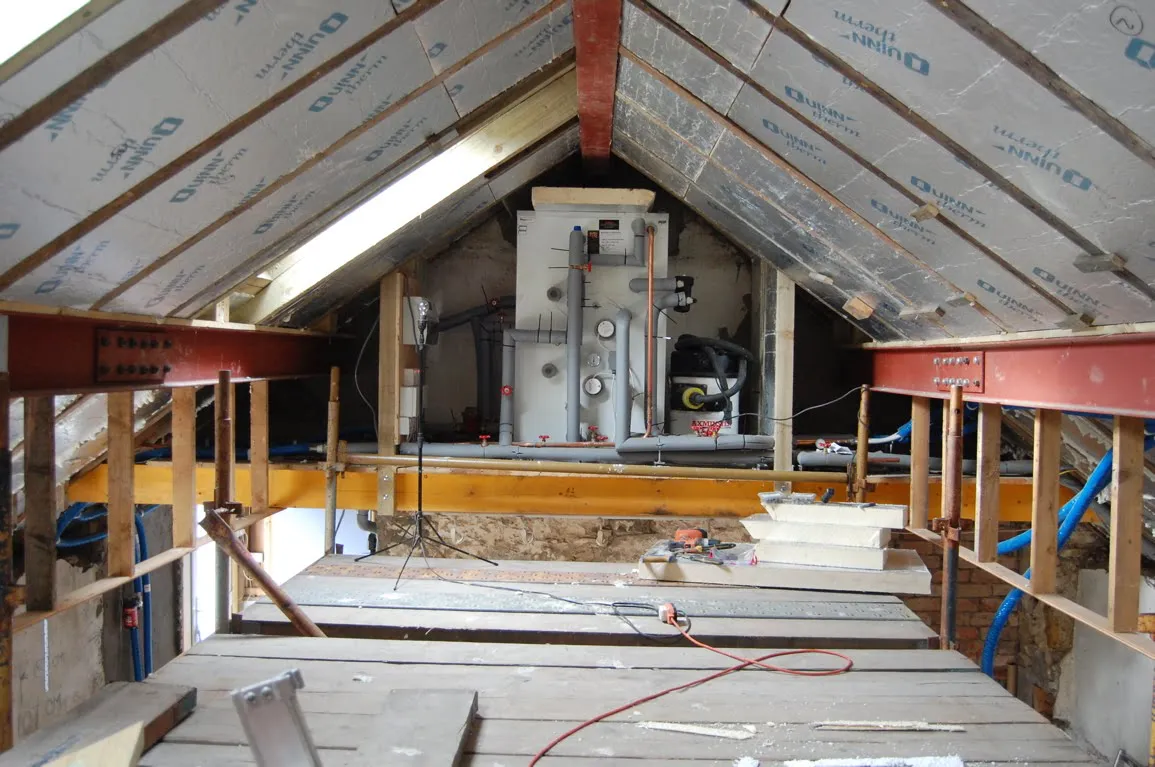
Twin- and triple-wall chimney systems in low-energy homes have been an issue for some time. Installers and architects are trying to make buildings as airtight as possible, with little or no break in the insulated envelope — and a chimney is, by design, a break.
What the issue is
Chimney systems for solid-fuel appliances — wood-burning stoves, boilers, pellet stoves — all get hot, and all have the potential for a chimney fire inside them, which can mean internal temperatures above 1,000°C. To keep the property safe, manufacturers specify a gap around the chimney that must be kept clear of combustible materials.
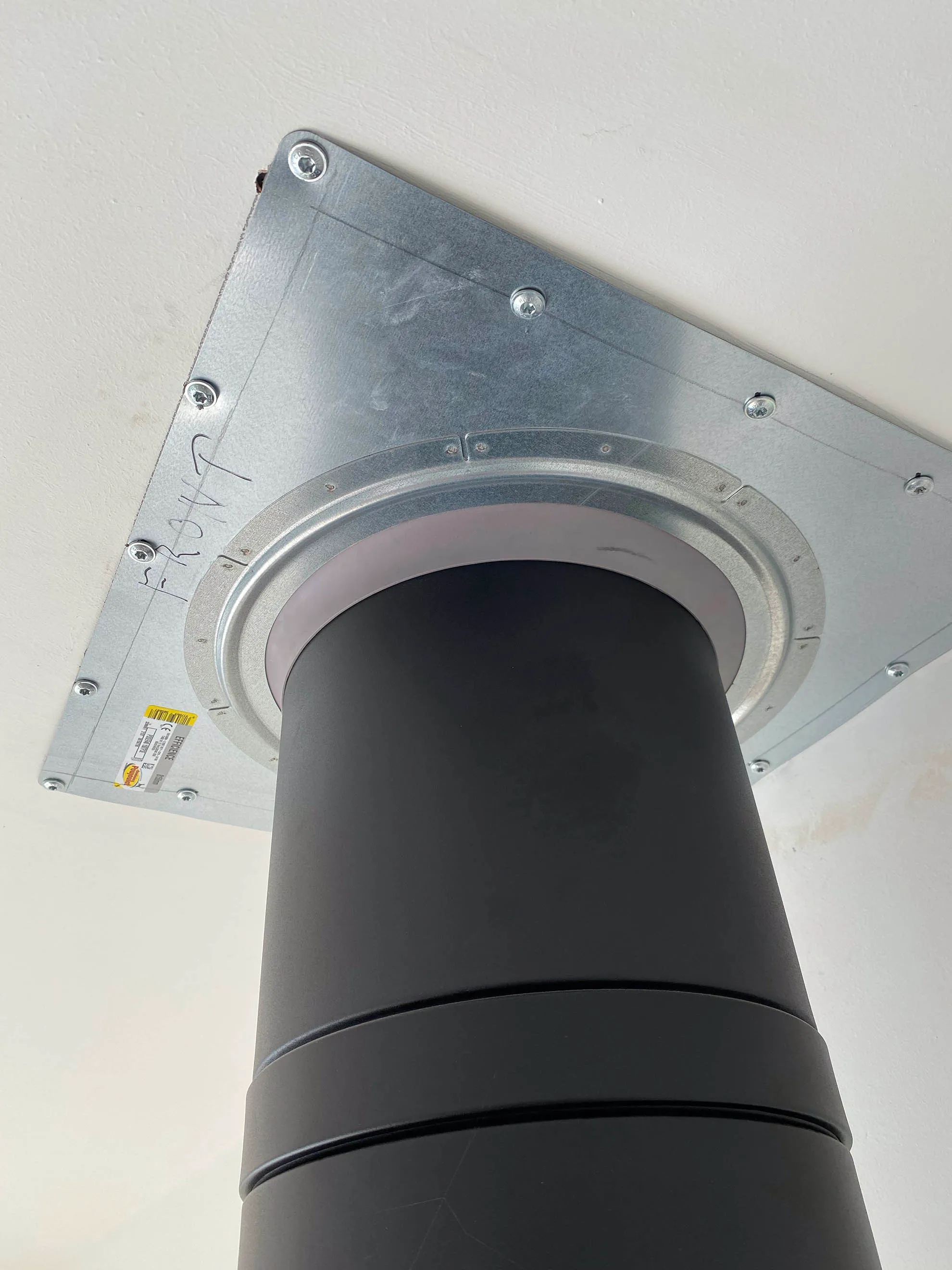
So where the chimney passes through a wall, ceiling or roof, that air gap contains no insulation — effectively a hole in the building's insulation envelope. Not the end of the world in an older house. But as homes and commercial buildings try to reduce the carbon and the cost of space heating, stopping heat leaking out around the chimney matters, and on top of that we are now building for airtightness with continuous insulation. So how is it done?
Two manufacturers, one idea
Two manufacturers on the European market have developed products for the low-energy and Passive House market. Both are tried and tested, and we have used both on projects.
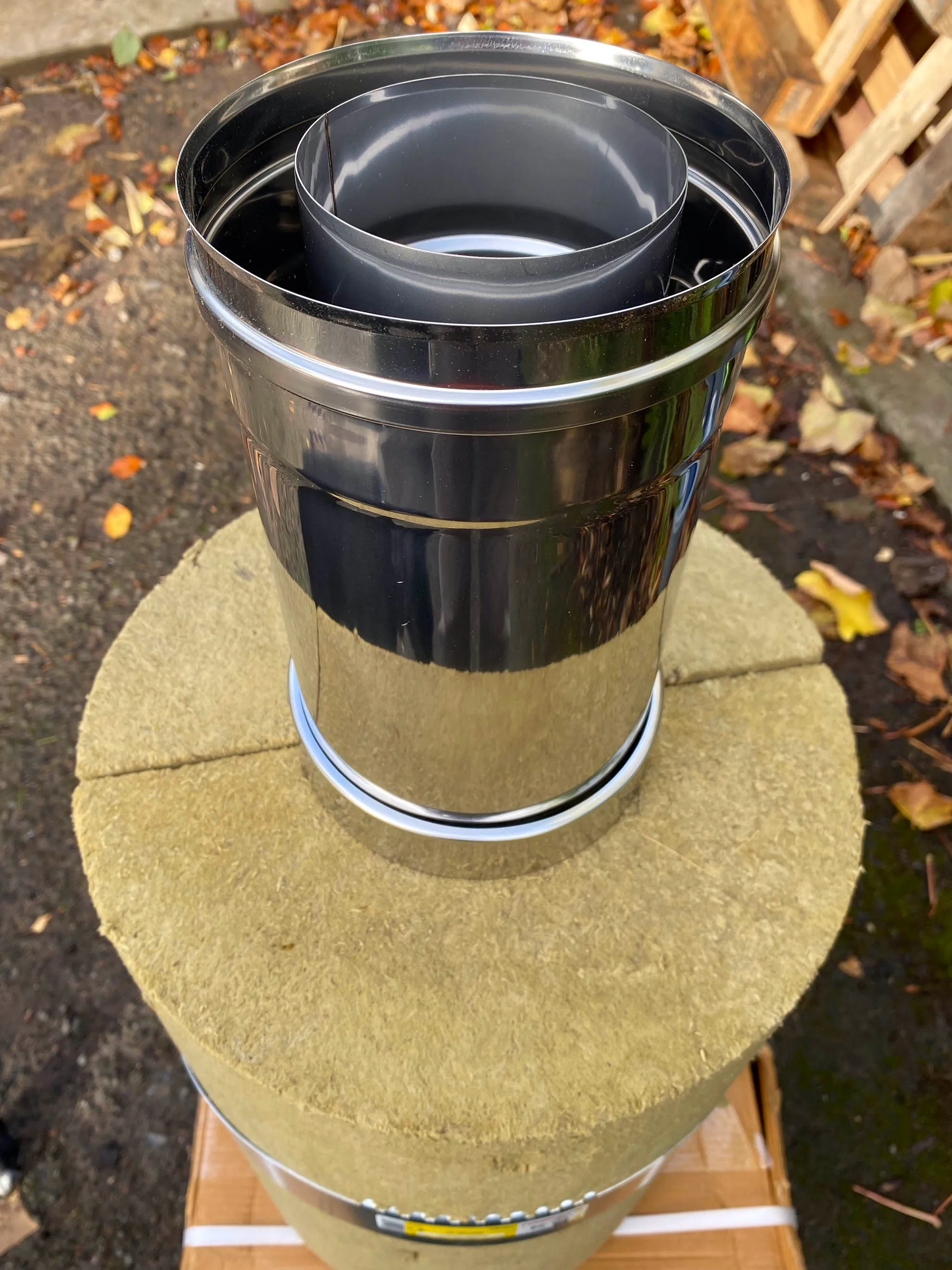
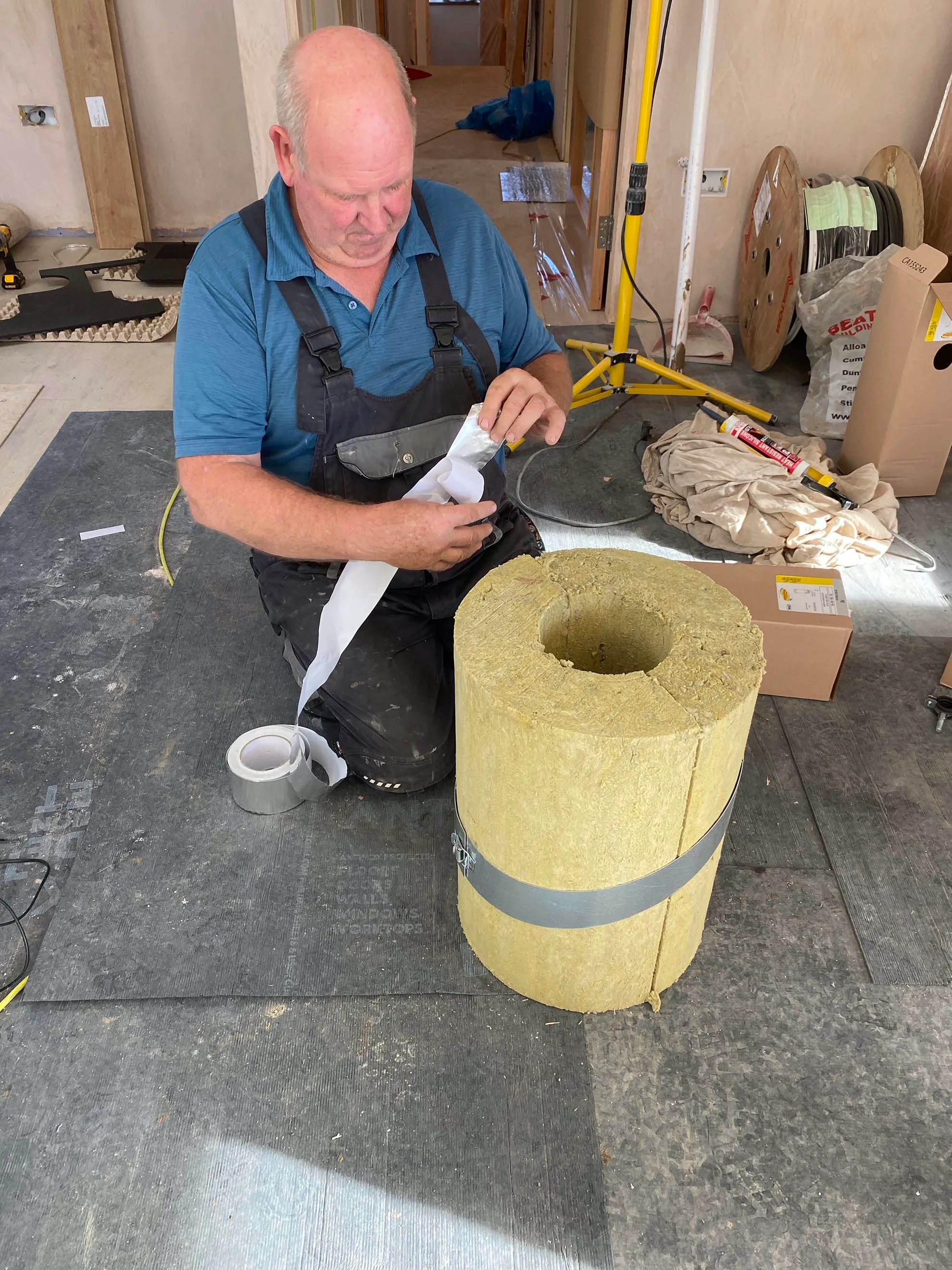
Schiedel, a UK manufacturer, makes our bread-and-butter twin-wall products, and makes a "protect box" kit for its twin-wall range.
Poujoulat, a French manufacturer, makes an airtight kit for a number of its products: its standard twin-wall (Therminox); the balanced chimney system we use for pellet stoves and small boilers (PGI); and a triple-wall system, where the extra gap in the chimney ducts combustion air down to the firebox for efficiency.
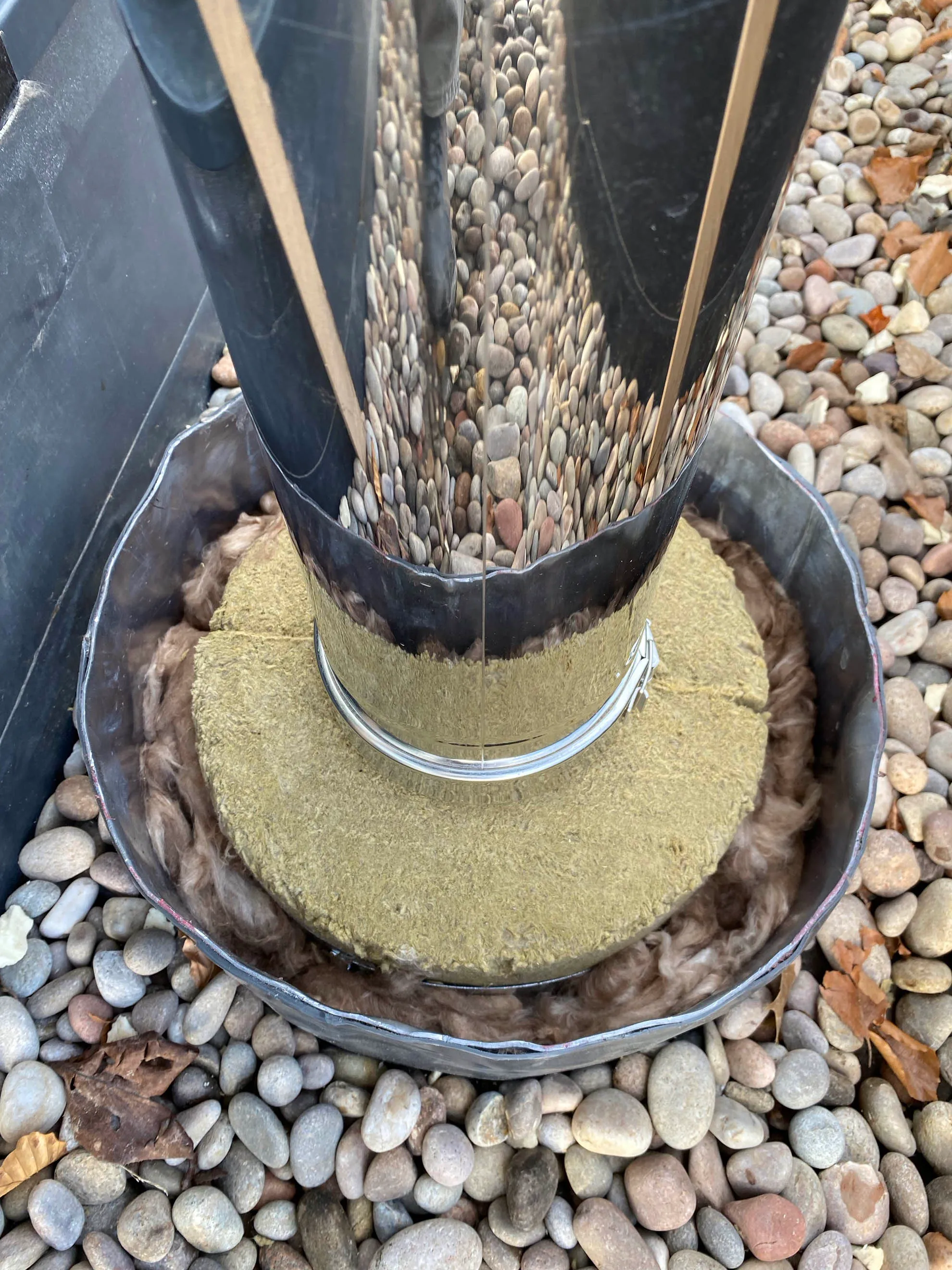
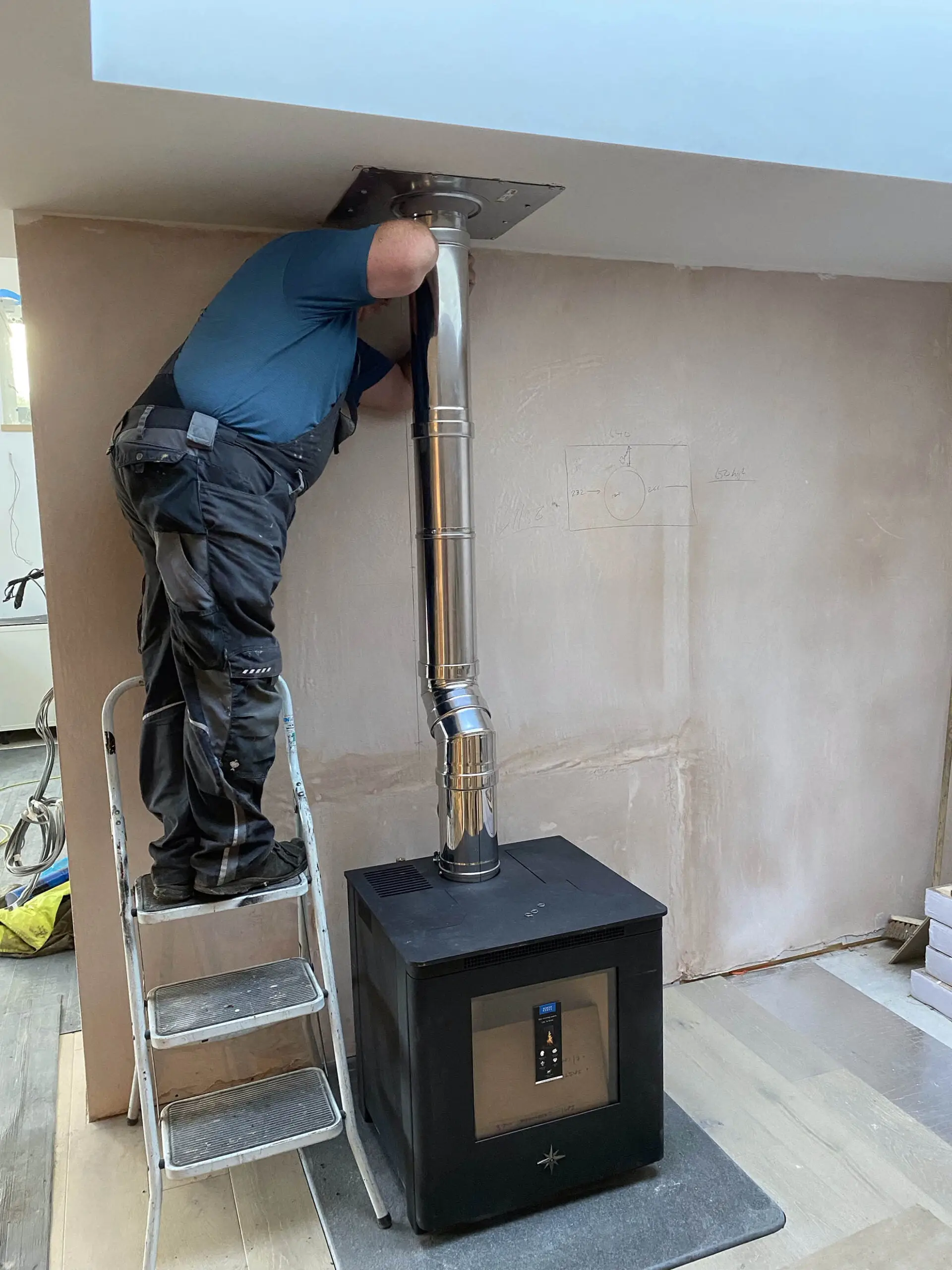
Both manufacturers use the same idea: a high-density mineral wool sleeve that fits snugly over the chimney. The sleeve sits where the chimney passes through the insulated part of the roof or wall, so there is no longer a gap in the insulated envelope.
And airtightness?
New buildings have an airtight membrane, sealed throughout the building around windows, ducts and construction joints. For the chimney, the manufacturers have made a steel plate with a flexible EPDM rubber seal for the flue to pass through, giving a snug seal around it. The plate has a second rubber seal on its rear face, so it can be sealed to the airtight membrane, ceiling or wall — or taped on the face with airtightness tape. Both come with a decorative wall plate to finish.
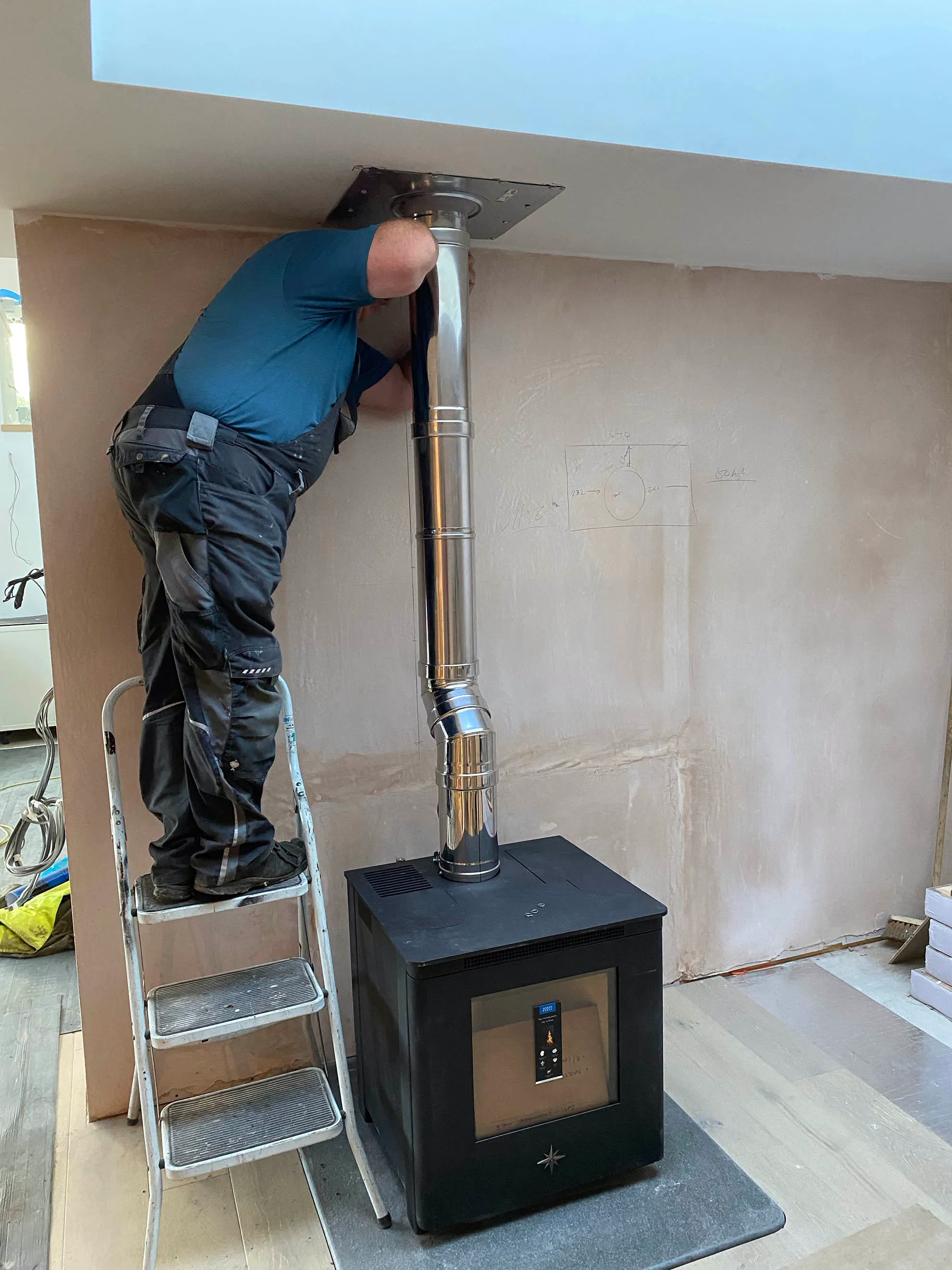
We hope this helps explain how a chimney can work safely in airtight, low-energy construction. It is not an installation manual: always follow the manufacturer's instructions and use a qualified installer, and check for up-to-date technical guidance, since products change. Pictures are Gondwana Green Heat's own.