This has become a hot topic with our customers, who are increasingly aware that there is more than one kind of wood heating: steel, or masonry?
What a masonry stove is
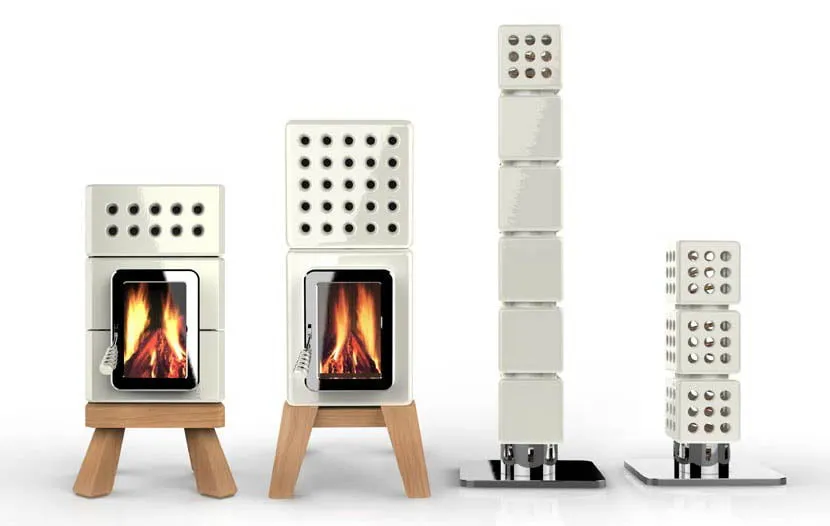
A masonry stove, or tile stove, is — as the name says — a stove made of masonry. Which raises the question of what masonry is: here, a heavy, dense material that can handle extreme heat, stays stable at extreme temperatures, and has the mass to absorb all the energy the fire produces. Masonry heaters are made of firebrick, fire cement, silicon carbide, ceramics and refractory castings.
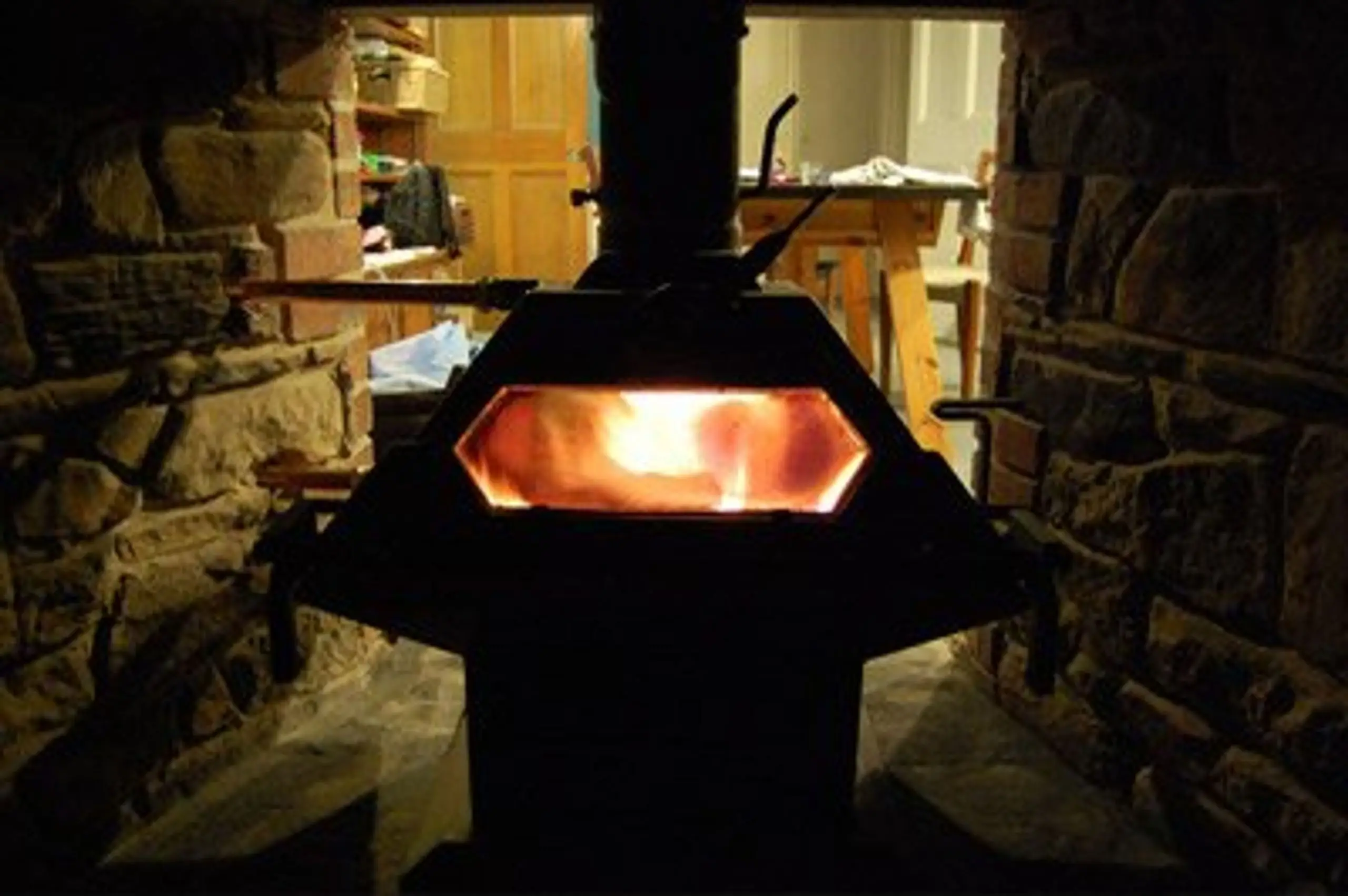
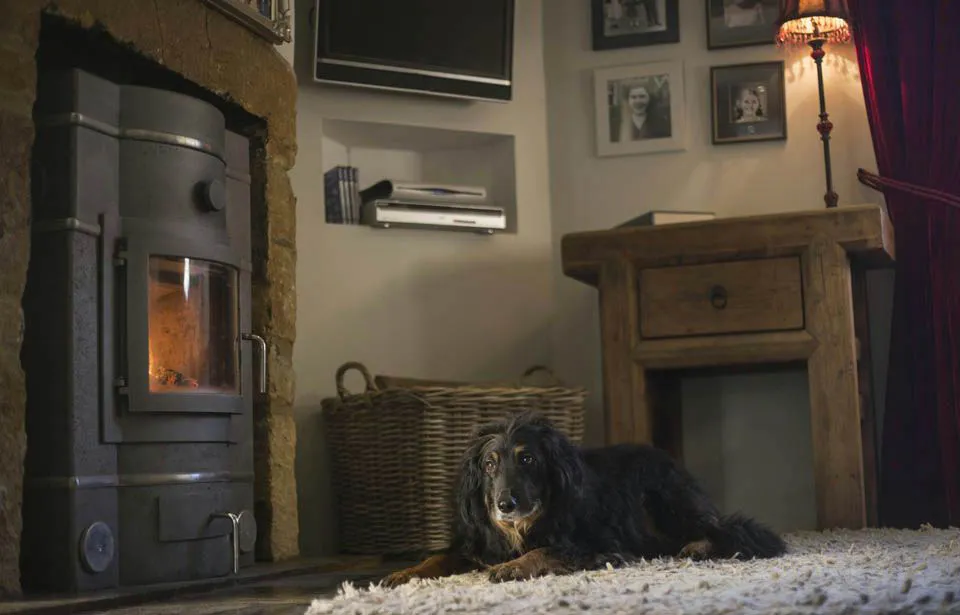
The essential difference between a masonry stove and a conventional steel or cast-iron stove is that the masonry stove stores the heat of the fire and releases it gently, without overheating the room it stands in. Overheating that room is a common complaint with steel and cast-iron stoves: the room gets uncomfortably hot, then cools quickly a few hours later, because a steel or cast stove has no thermal mass — nowhere to keep the heat — so it radiates and convects all of it into the room at once.
How else is a masonry heater better?
It can potentially heat your whole home. A masonry heater gently moves warm air around the property, so it can be the main heat source — and so reduce reliance on gas and oil. It can also be fitted with a coil or back boiler to heat your hot water, which makes a masonry heater a whole-house answer for heating and hot water.
How big is one, and will it fit my fireplace opening?
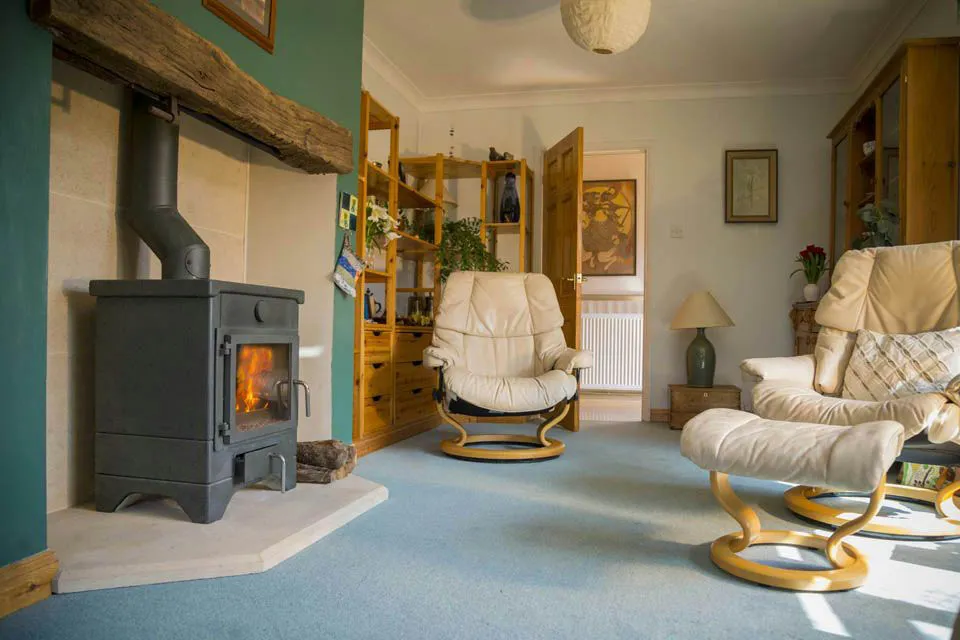
In most cases, yes. Masonry stoves come in a range of outputs and sizes to fit most homes, and we can swap your existing wood-burning stove for a masonry heater. We also build custom masonry heaters, in whatever size and appearance the house calls for — with an oven, a nook for the pets, even a warm seat. The options are almost endless.
Is it more work than a steel stove?
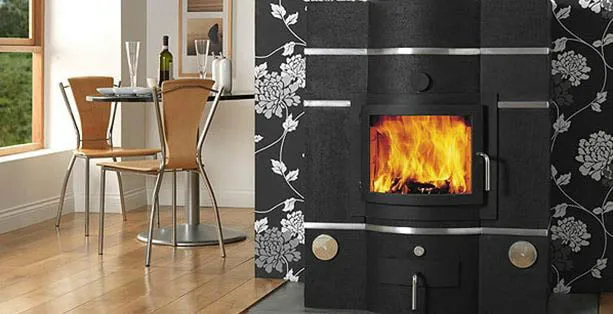
It is principally the same: you burn wood. But you burn a batch and let the stove release the heat slowly, rather than feeding the fire continuously. A masonry stove is generally less work because it is more efficient — 80% and above — and so burns less wood. It is also cleaner: higher combustion temperatures burn off more of the fly ash, and the secondary, gasification stage means less carbon monoxide reaches the atmosphere. That makes the masonry stove a very green option.
Masonry heaters come pre-manufactured in kit form, or are built on site in your home. We do both.
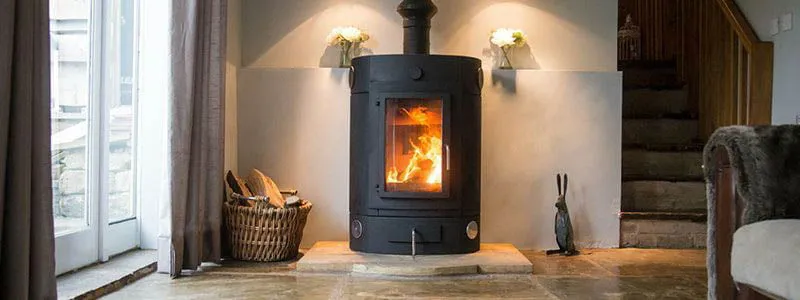
So has the steel stove had its day?
With more people interested in high efficiency, low-cost energy and even going off-grid, the masonry stove certainly has a firm place in our future. But things move slowly, and attitudes in the UK take a lot of changing — what is commonplace in Northern Europe will probably take a decade to become mainstream here.