More and more people are interested in storing energy. That used to mean solar PV; now we get emails from across the UK about storing the output of small wind turbines and small hydro schemes too. This post is about which renewable sources can be used, and why and how the electricity they produce is worth storing.
Gondwana Green Heat has been designing, selling, installing and commissioning woody biomass, solar thermal and thermal storage systems for well over ten years, and thermal stores have always been part of that — capturing energy for when it is needed. We work with three thermal store manufacturers, each with its own expertise, specification and size range, and supply stores from 50 litres to 200,000 litres, with immersion heaters from 1.5kW to 2,000kW.
Buffer tanks, accumulator tanks and thermal stores are all the same thing: tanks that store thermal energy.
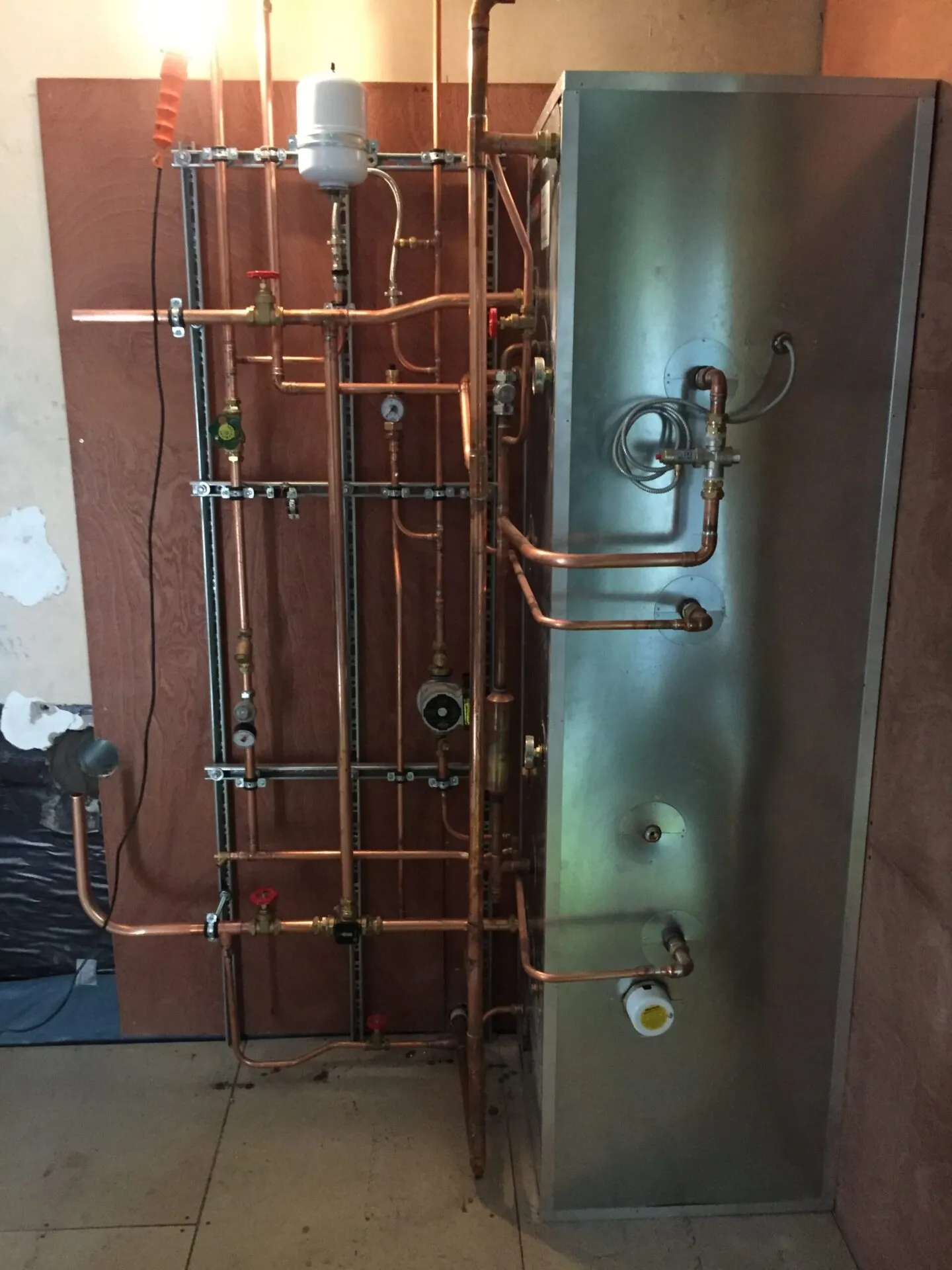
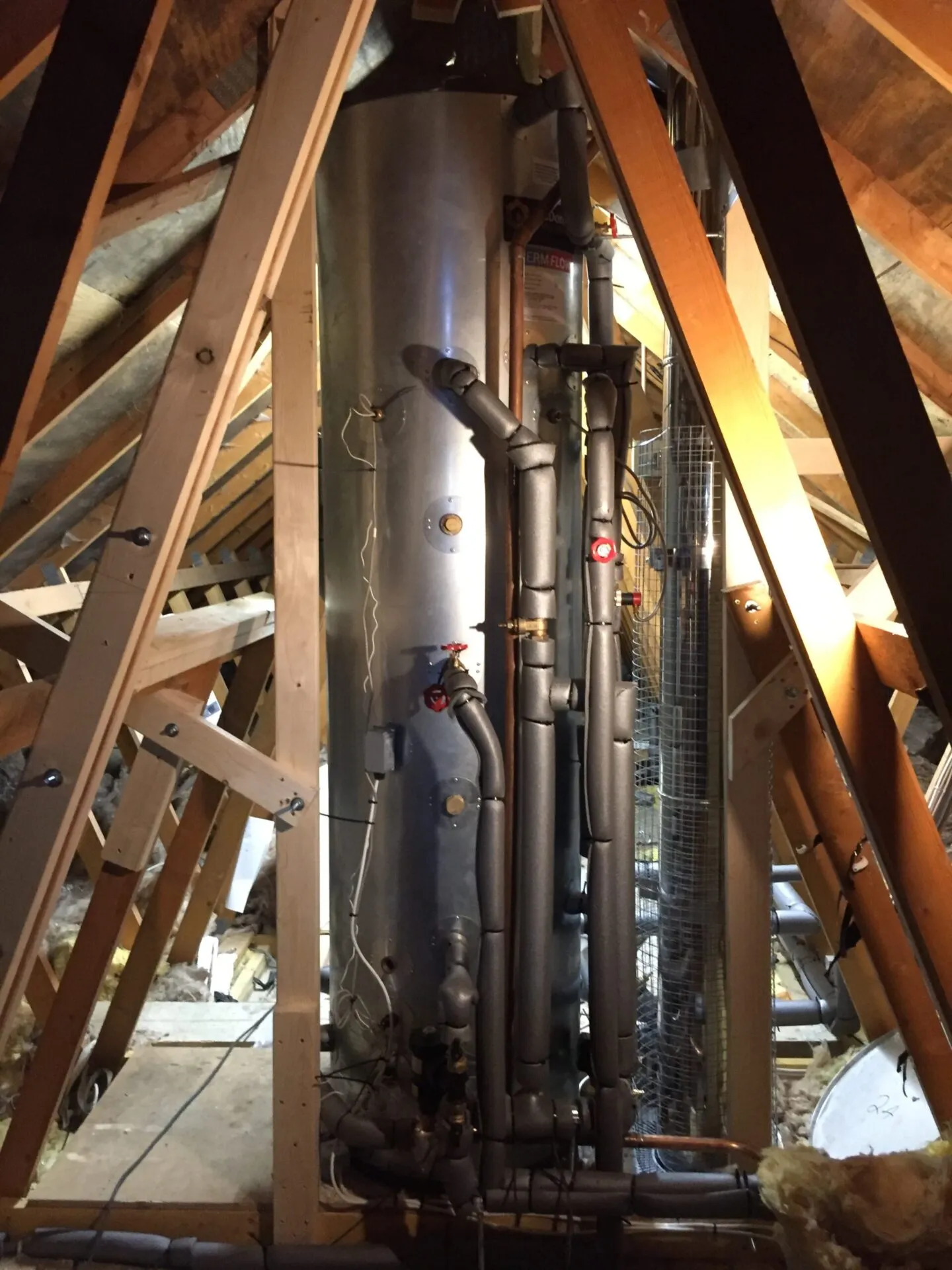
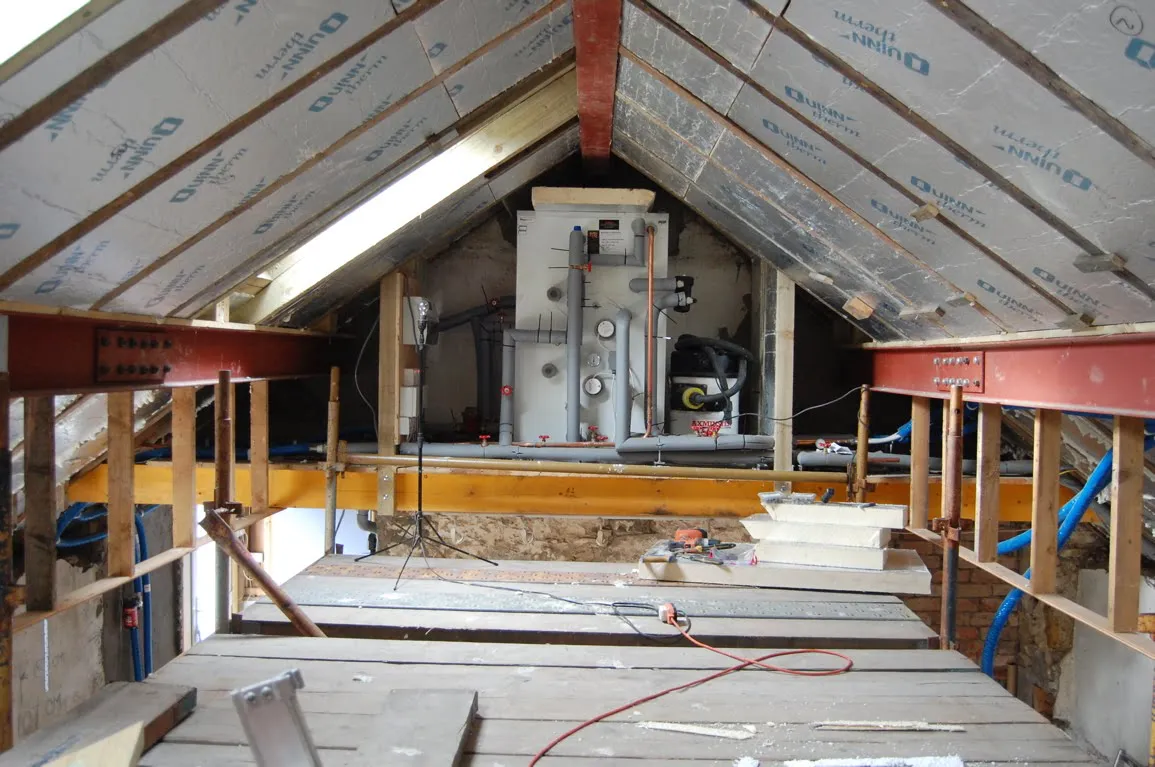
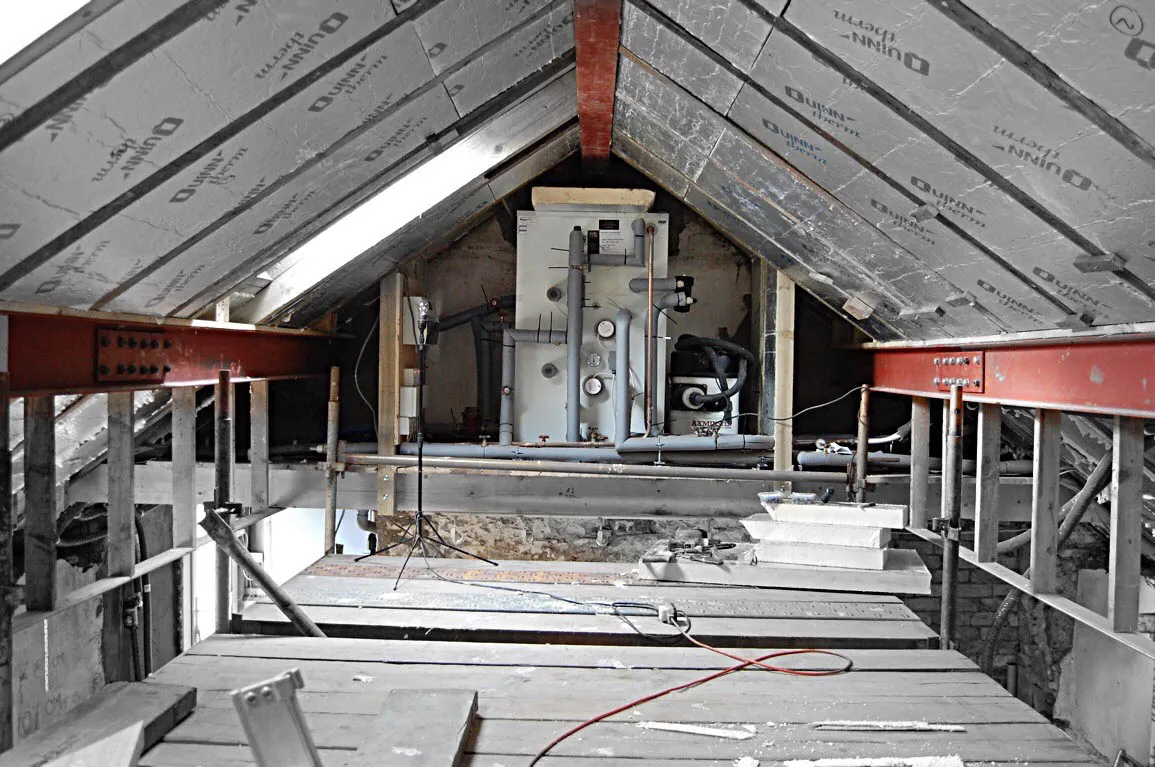
Two small thermal stores during installation.
The basics
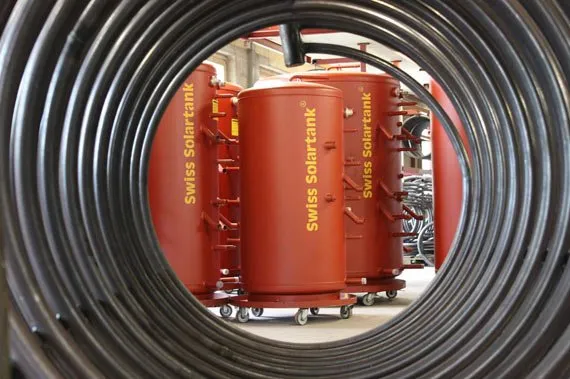
What is a thermal store? A tank that holds a liquid — normally water — to store thermal energy. They come in various shapes, cube and cylinder among them, and generally look something like a hot water cylinder. They can be as small as 50 litres or as large as 200,000, or several linked together.
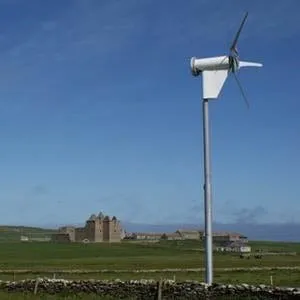
What is a wind turbine? A machine that makes electricity from the wind.
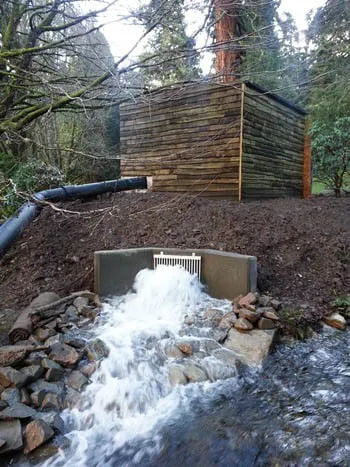
What is hydro? Water turning a turbine, which makes electricity.
Using the electricity from a turbine, a hydro scheme or solar PV
In most cases the excess electricity is sold back to the grid, to be sold on to other homes and businesses; it can also be used by nearby properties for electric heating and general use. A thermal store can absorb that excess instead, by heating the water in the store with an immersion heater — much like the element in a kettle.
Keeping as much of the cheap, or nearly free, energy as possible
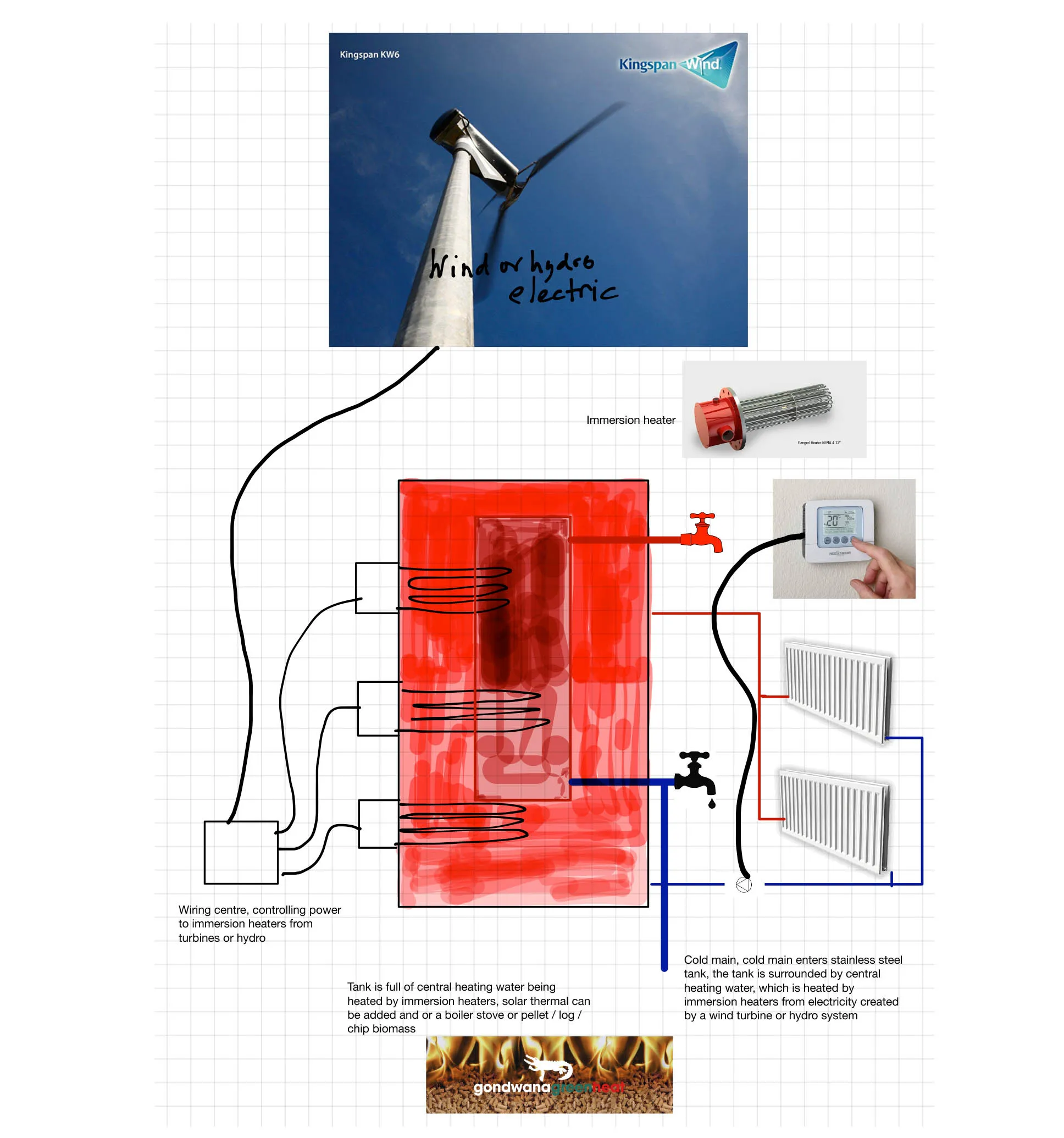
We fit a thermal store with immersion heaters. The electrical energy becomes thermal energy, and the thermal energy heats the hot water and the central heating — or an industrial process. Wind and hydro work best in the cooler months, when it is windier and wetter, which coincides with the heating season, so a correctly sized turbine or hydro scheme can power, or supplement, your heating and hot water. And because it produces energy all day through the winter rather than only when you want it, a much smaller turbine or hydro output is needed than the output of an equivalent gas, oil or pellet boiler.
Once the store has reached its maximum temperature, the surplus goes either to the grid or into "thermal holes": slabs or cubes of concrete or limecrete under the building that release heat slowly, reducing the need for radiators or underfloor heating through the heating season. In summer, when wind and hydro produce less, less heat is needed — so they suit year-round heating and hot water rather well.
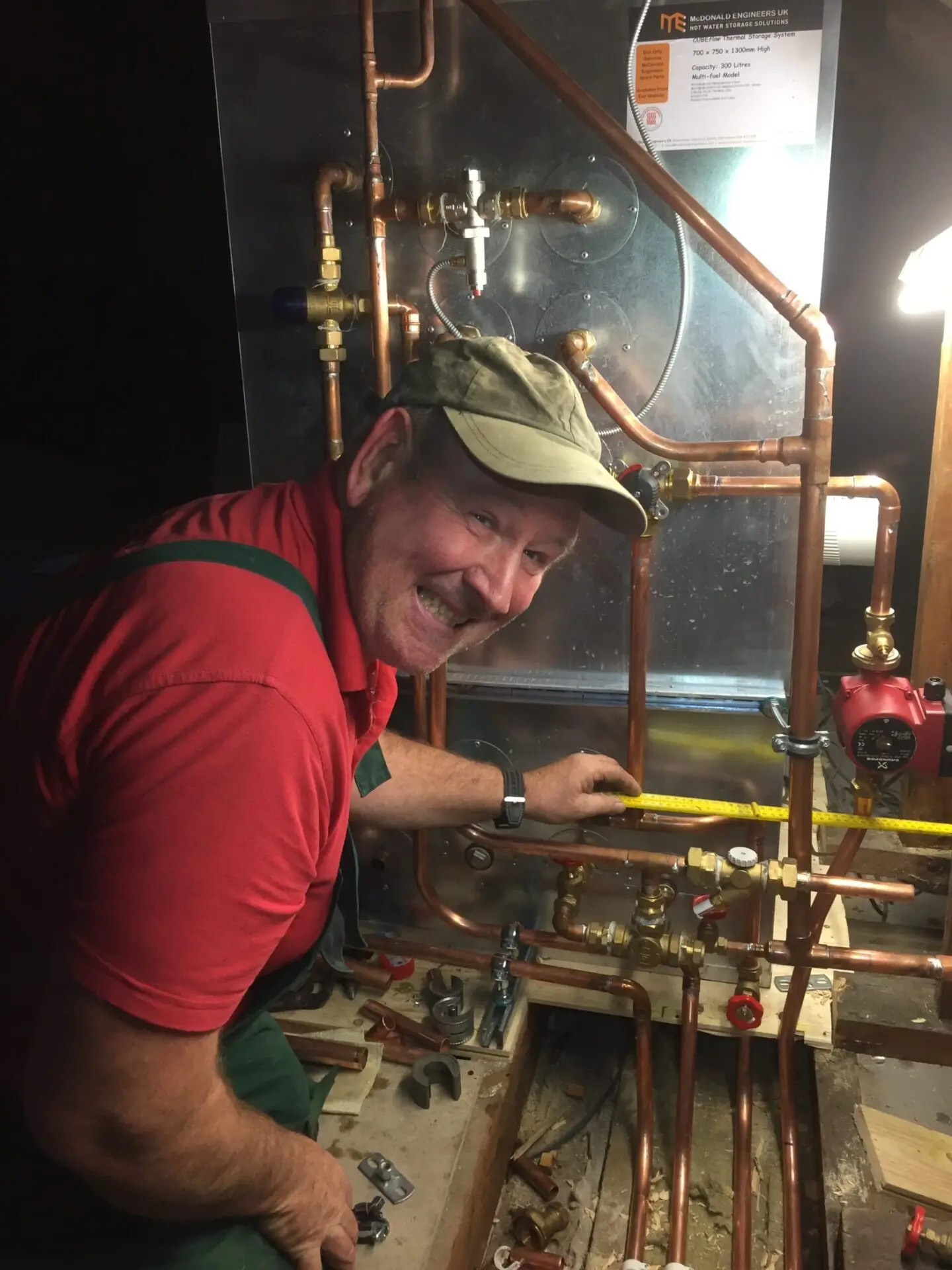
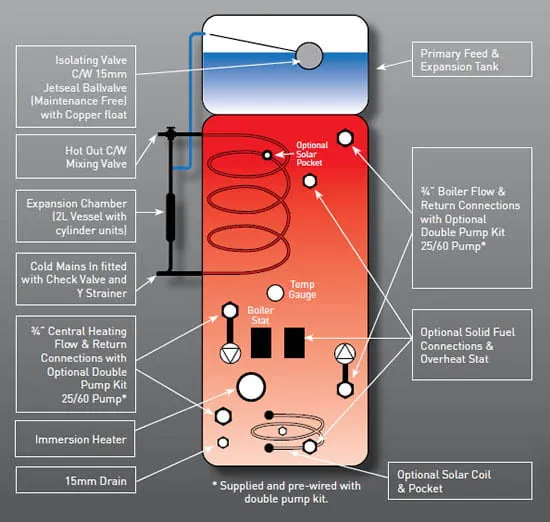
A small cube thermal store with a hot water coil built in — picture courtesy of James Perry of Auchenheath, Lanarkshire.
Can I put several heat sources into one store? Yes. We often install systems with a small turbine or hydro scheme alongside solar thermal for summer hot water and a boiler stove or pellet boiler stove. It is not as complex as it sounds; it comes down to planning, experience and a small team of good engineers.
Can it heat more than one home? Yes — the opportunities for district heating are considerable.
A simplified sketch of a turbine and thermal store system with radiators.
If you are interested in thermal storage using wind, hydro, solar or woody biomass, please get in touch.