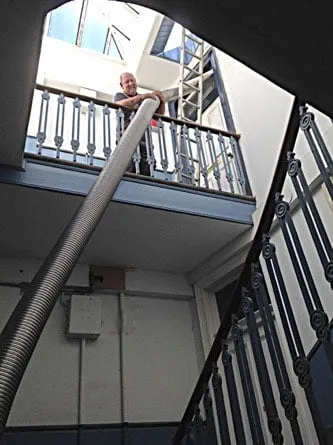
We get a lot of enquiries about thermal stores, big and small, using every heat source imaginable, and we spend hours each month explaining them to potential customers. What we have found is that customers, architects and plumbing and heating engineers often do not really know what one is.
What a thermal store is
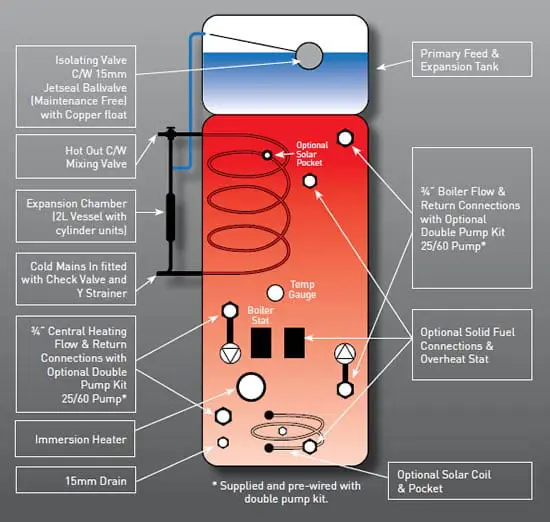
A cylinder, small or large, that stores thermal energy. The tank is filled with primary central-heating water rather than the potable hot water you find in a conventional hot water cylinder.
These are the heat sources that can be connected to a thermal store — one of them, or several together:
- A wind turbine, through immersion heaters
- Solar PV, through immersion heaters
- Wood, through dedicated pellet, chip and log boilers
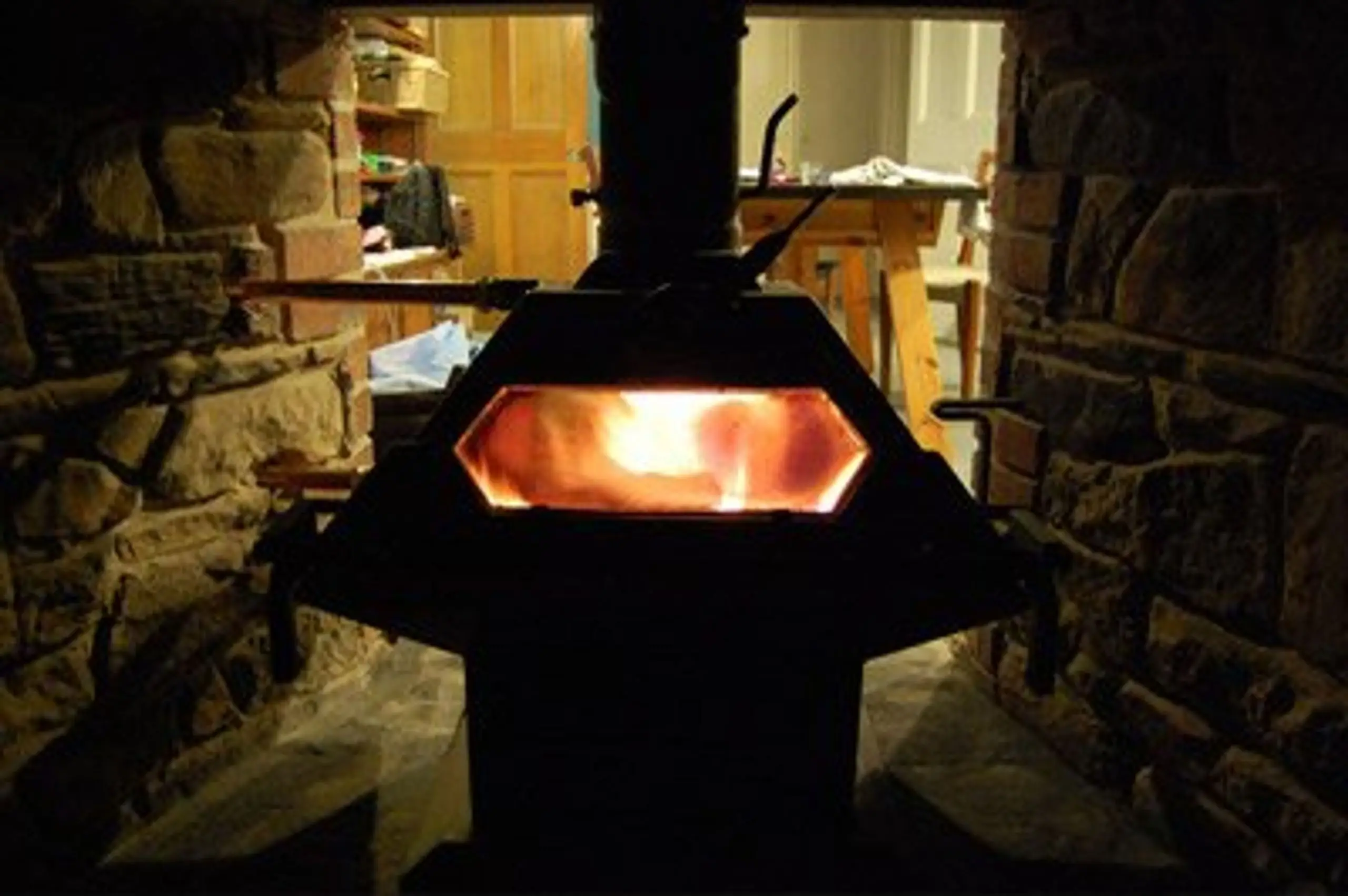
- Wood-fuelled boiler stoves
- Wood-fuelled masonry stoves and heaters
- Pellet boiler stoves
- Solid fuel — coal, anthracite and the like
- Mains gas or LPG
- Oil
- District heating — one centralised boiler heating one or several stores
- Thermoelectric generation, through immersion heaters
- Heat pumps: ground, pond and air source
We have also experimented with compost coils, where decomposing vegetation heats water in a coil to give low-temperature energy to the store.
A question we are asked every week
Can I integrate a gas or oil boiler with a wood-burning boiler stove, or with solar panels in the future?
Many of our enquiries are from homeowners or businesses with a gas or oil boiler and conventional steel radiators, who want a wood-fuelled boiler stove or pellet stove integrated seamlessly — to cut down on summer burning and to rely less on gas and oil. It sounds challenging, but it is a type of system we have a great deal of experience of, and years of it have refined the way we design and install them, so the customer gets a custom system with the quality and efficiency to match.
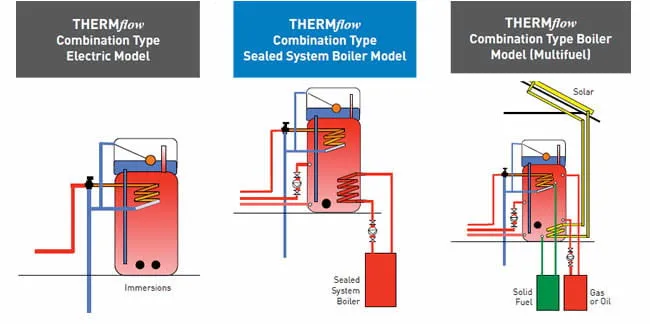
How a tank of heating water heats your tap water
There are several ways; we believe two of them are the quality ways.
- A coil inside the store. Cold tap water passes through a coil surrounded by hot central-heating water, and is warmed indirectly into hot tap water. The hot water leaving the store is then blended down to a safe temperature.
- A tank inside the store. A smaller tank is suspended within the thermal store, with a pipe at the bottom feeding in cold tap water and a pipe at the top supplying hot water to the property. This suits very high hot-water demand — large homes, small hotels, industry.
The advantages of a thermal store
- No expensive mandatory servicing.
- Unvented cylinders need qualified personnel to fit, maintain and certify them. Thermal stores do not.
- Mains-pressure hot water.
- Thermal stores are typically much better insulated than hot water cylinders.
- Multiple heat sources combine easily, so you can heat your property with the cheapest energy available.
- Solar thermal and other renewables can contribute to the heating as well as the hot water — which an unvented cylinder does not offer.
- When heating demand is low, heat is drawn from the store without firing the boiler, so the boiler cycles less.
- Longer boiler life.
- Lower fuel consumption, because the boiler works hard and stays in condensing mode.
- No large heat-leak radiators wasting heat, on solid-fuel installations.
- Safety: systems can be vented or sealed depending on the heat sources, and different sources can be separated through coils within the store, some vented and some sealed.
- A store allows a low-temperature heating circuit, which typically saves homeowners around 20% on their heating bills.
- Future-proof: a quality store can take on new heating technology as it arrives.
- More safety: overheat "scorch" coils inside the store give solid-fuel and solar installations a further layer of protection.
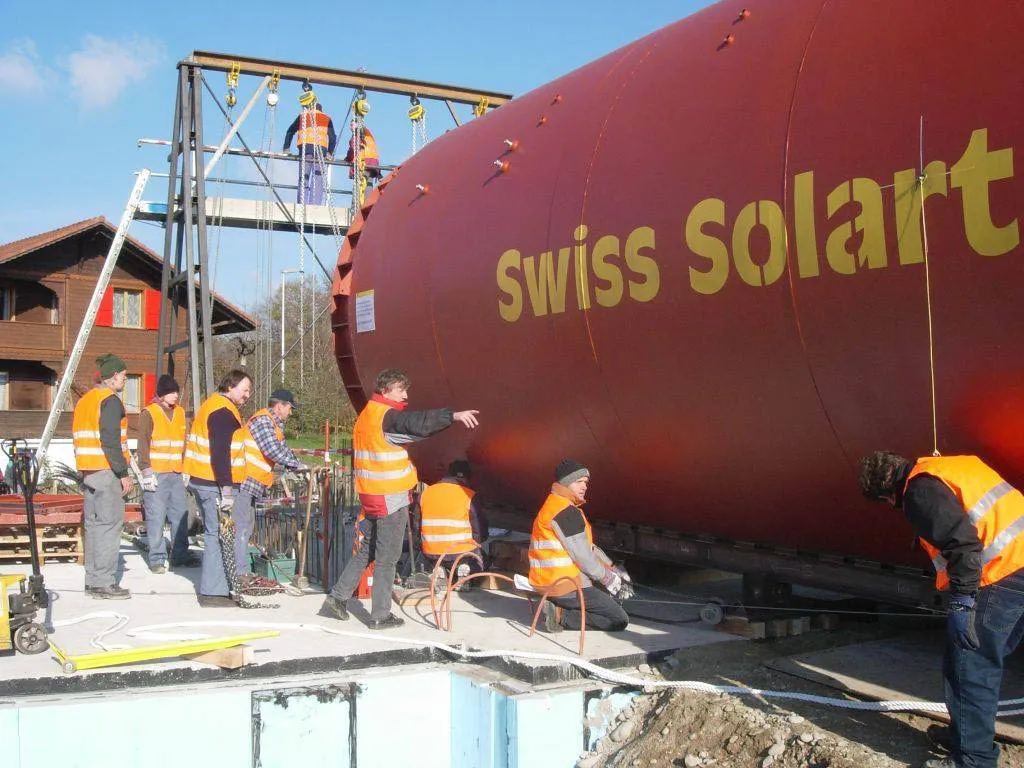
- Stores come in different materials and sizes to suit the property, the door widths, the hot water demand and the heat demand — from 50 litres to 200,000.
- One store can heat several buildings: simpler installation, and energy saved.
Example 1
I have a wood-burning boiler stove, a vented hot water cylinder and steel radiators. It works, but I burn a lot of logs and the house is cold once the fire goes out. How would a thermal store help?
By piping the boiler stove directly to a thermal store with a domestic hot water coil. The cylinder goes, and you get mains-pressure hot water at the taps. The radiators are heated from the store, with no need for oversized heat-leak radiators in upstairs rooms or the attic. And because the store holds the energy for when you want it, there is still heating after the fire has gone out.
The same system can take solar thermal and an electric immersion. Solar would heat your radiators and tap water from the sun; the immersion covers the times the stove is not lit, on an off-peak tariff — or, for those with solar PV, hydro or a wind turbine, for nothing.
Example 2
I live in a large Victorian townhouse with two gas boilers, some radiators and some wet underfloor heating. One boiler heats the hot water cylinders, the other the heating, and both are on their last legs. The system works, but the boilers are constantly cycling on and off, which my gas engineer says has shortened their lives. We also have two unvented cylinders and still run short of hot water. Can a thermal store make us more comfortable and cut our gas bill?
Yes. We would install a large thermal store with a large hot water coil, for first-class mains-pressure hot water at the taps. One quality, high-efficiency condensing gas boiler would heat the store, with a loading valve and balancing valves fitted for the correct flow through the boiler and a protected return temperature — keeping the boiler in condensing mode, so you actually get the manufacturer's efficiency rating.
We would then run a low-temperature circuit to the radiators and the underfloor heating, and fit an intelligent controller that calculates the energy needed to hold the house at the set temperature, so the same comfort comes from cooler water. That typically saves around 20% on fuel.
When small amounts of low-temperature energy are needed — the underfloor heating, say — they come from the store, so the boiler is not cycling on and off, which wastes gas and rarely lets a boiler reach condensing mode. The boiler only runs when the store has dropped substantially: less gas burned, less wear, a longer life. Other renewable sources, such as solar thermal, could be added later to reduce costs further.
So has the hot water cylinder had its day?
In short, yes. We sell and install thermal stores for every situation from domestic to commercial, sourced from three suppliers and manufacturers so we can offer the right one for yours. Get in touch if you need help with a full package, or with sales and design.
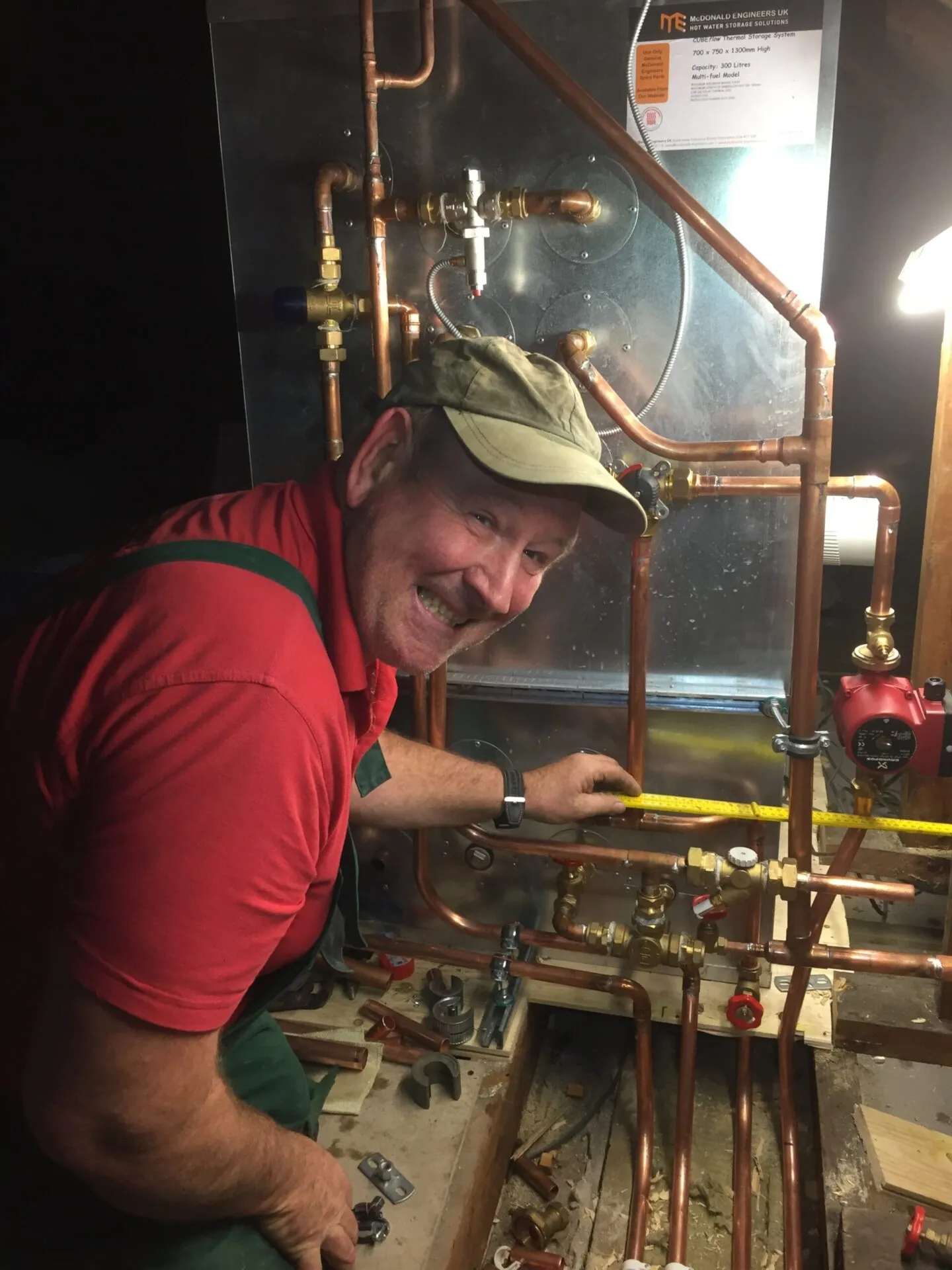
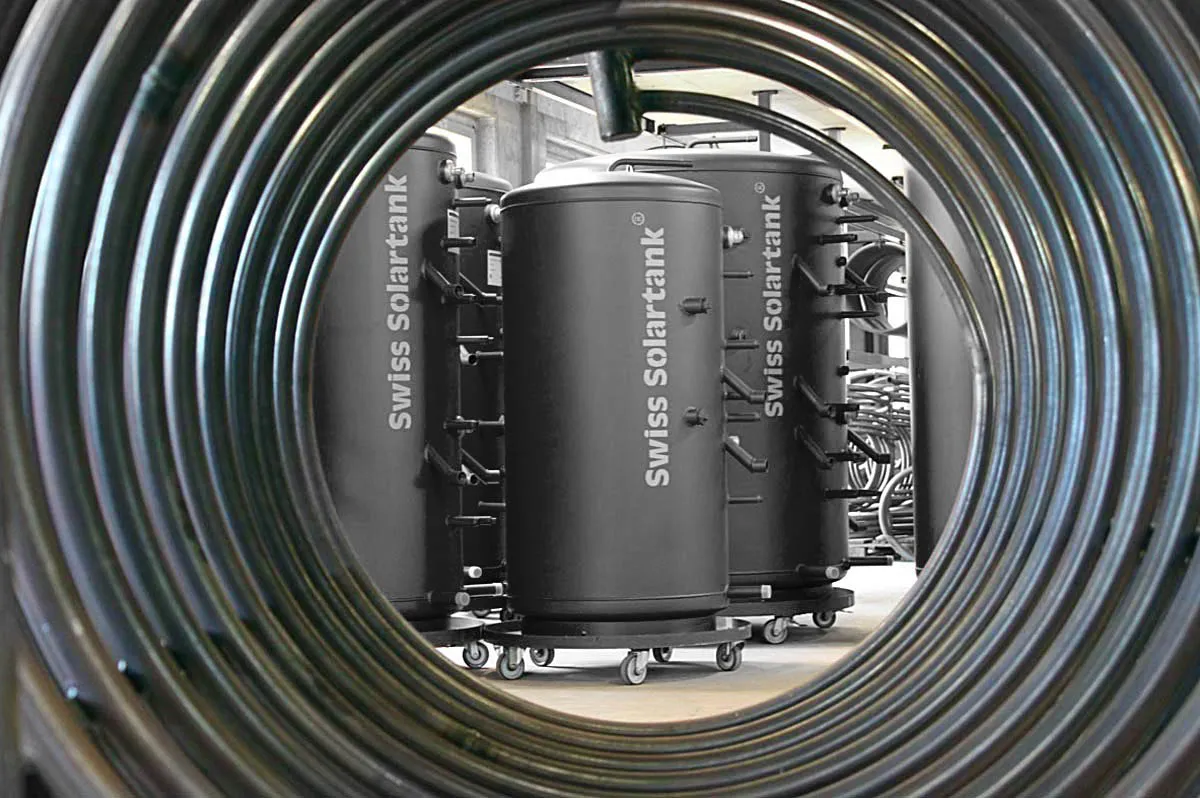
Our thanks to the customers who let us photograph our work in their homes, and to MacDonald Engineers and our Swiss partners for images.