Heat pumps


Air source – Ground source – Ventilation / Exhaust air Heat pumps – MVHR heat pumps

Dave at Gondwana fitted his first heat pump in 2004, it was a 5 kw Nibi air to water heat pump.  The heat pump heated a tropical Palm  /cyad house up the Ettrick valley about 30 mins from Peebles. We had underfloor heating pipes imbedded in concrete with soil growing beads on top.  Its the most unusual heat pump project we have ever done, in a very in-hospitable location with winter temperatures dropping to -20 on the year of install.

We work with four main types of heat_pumps. The heat‑pump mechanism is essentially the same in all of them; the difference lies in the energy source they use—air, water, ground or exhaust air. Choosing the right type of heat pump depends on several factors: the heat_load required in kW, the local climate, the outdoor space available, and any existing systems already in the home.

This section introduces each heat‑pump type, explains where they work best, and outlines the key considerations that determine which option is right for your project.

Air Source Heat Pumps

Air source heat_pumps are the most common type used in the UK and have been around for decades. They are installed outdoors and use outside air to boil the refrigerant inside the unit, which is how they generate usable heat.

Because outside air temperature changes throughout the year—from around 25 °C in summer to –5 °C in winter—air source heat pumps must be designed carefully. In warmer conditions the refrigerant boils more vigorously, producing more energy; in colder conditions it produces less. This is why correct heat_load_calculation and an understanding of the local climate are essential to ensure the system performs reliably all year round.

Air source heat pumps can also work alongside other heat sources, such as:

  • Direct_electric or Solar_PV
  • Solar_thermal
  • Biomass or wood‑fired boiler stoves

They can be used in domestic or commercial applications, including:

  • DHW_cylinders
  • Thermal_stores, buffer tanks and accumulator tanks (with DHW coils or plate heat exchangers)
  • Radiators
  • Wet_underfloor_heating
  • Warm_supply_air via MVHR ductwork

Heat pumps are most efficient at lower flow temperatures. This is why underfloor heating is often recommended—it runs at lower temperatures naturally. Radiators also work very well, but they must be correctly sized for low‑temperature operation, which usually means larger radiators than those used with traditional boilers.

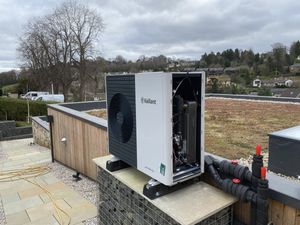
Air source heat pump

air source heat pump, heating a very large low energy home near Edinburgh

Ground Source Heat Pumps

Ground source heat_pumps use the stable warmth stored in the ground to boil the refrigerant inside the unit. Below roughly 900 mm, soil temperature remains very consistent throughout the year. We extract that energy using pipes laid in trenches, or—where space is limited—via pond_loops, lake_loops or boreholes. Boreholes are also useful on sites where a water‑supply borehole is already planned.

Because the ground temperature is stable year‑round, ground source systems deliver consistent output and are generally more efficient than air source units. They are unaffected by cold snaps, and their performance does not fluctuate with outdoor air temperature.

The downside is cost. Ground source systems require trenches, boreholes or water‑loop installations, all of which involve significant time, machinery and labour. This makes them more expensive to install, but cheaper to run—especially in colder months.

Most customers still choose air_source_heat_pumps, often supported by another heat source such as a wood_stove or pellet_stove. This combination allows you to boost your home’s temperature during short periods when an air source heat pump may struggle, while keeping overall running costs low.

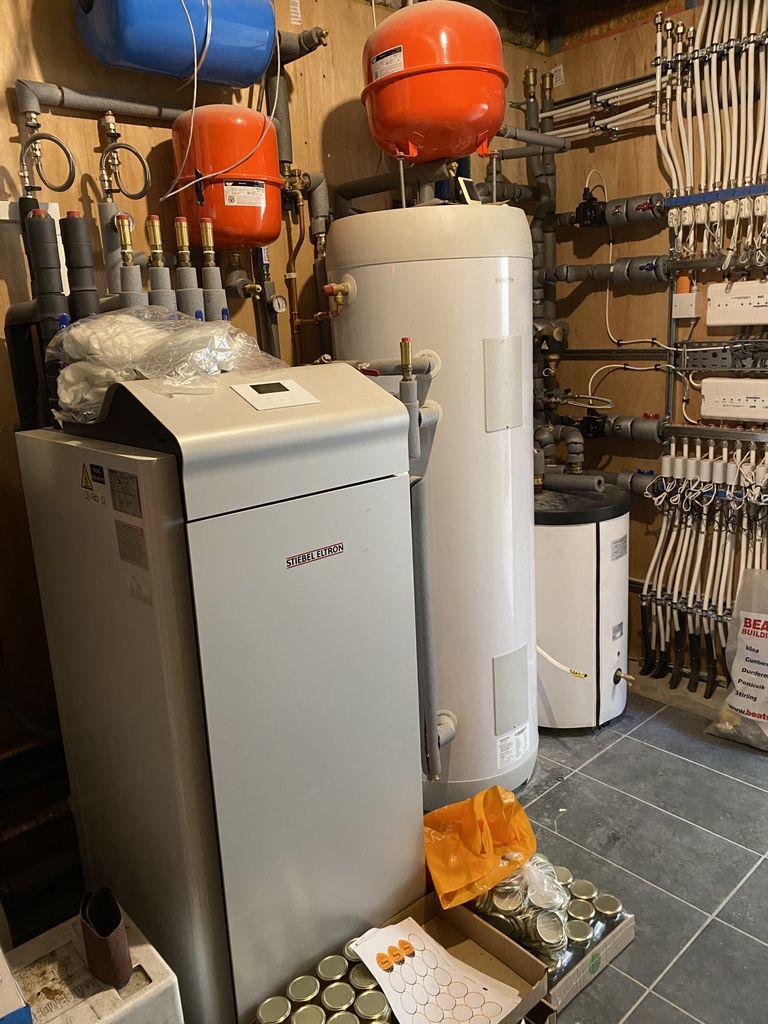
Stiebel , ground source heat pump, near Peebles

Ventilation Heat Pump Cylinders / Tanks

Ventilation heat_pump_cylinders are one of the simplest and most impressive heat‑pump technologies available. Although designs vary between manufacturers, the principle is the same: a hot‑water cylinder or buffer tank with a compact air‑source heat pump mounted on top. The unit draws air through ductwork—either fresh air from outside or waste/stale air from an MVHR system—to boil the refrigerant.

When using MVHR exhaust air, efficiencies are extremely high, with COPs typically in the 4–6 range (400–600% efficient). The heat pump warms the cylinder, which can be used for DHW and, in some models, limited space heating—usually around 20–40 m² of underfloor heating.

Many ventilation heat‑pump cylinders also include indirect coils for solar_thermal or connections for small pellet_stoves or boiler stoves.

The downside is output: these units are small, typically 1.5–4 kW. They are ideal for compact homes, well‑insulated properties, or any building already fitted with MVHR. They are also an excellent way to incorporate heat‑pump technology purely for DHW.

Most enquiries we receive for ventilation heat‑pump cylinders come from commercial buildings or large properties where full air‑source or ground‑source systems would be too costly to install or operate. Ventilation cylinders allow clients to benefit from heat‑pump efficiency for DHW only—reducing running costs and meeting sustainability targets without the expense of a full system.

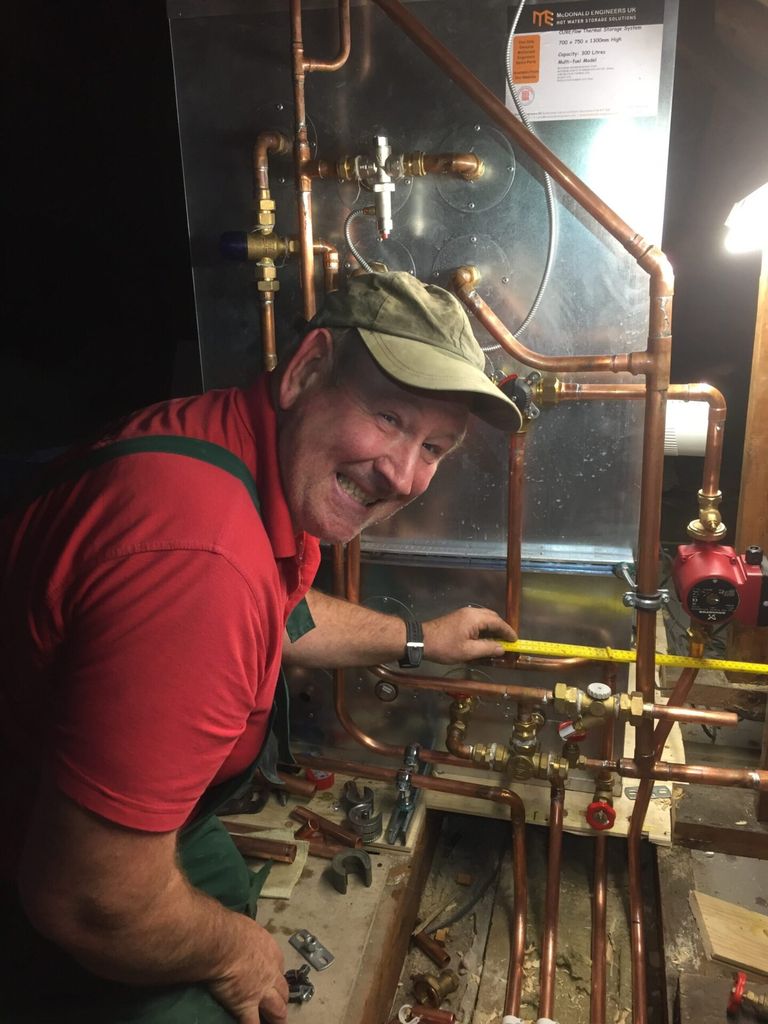
Stuart working on a heat pump thermal store in Portobello Edinburgh.

MVHR Units with Integrated Air Source Heat Pumps (Compact Units)

The first compact MVHR heat‑pump system Dave installed was a Genvex unit over twenty years ago, in a low‑energy Scandinavian kit home. It combined MVHR ventilation, space heating through the supply‑air ductwork, and a DHW_cylinder—all in one integrated package.

Compact units follow the same principle today. They are MVHR systems with a small air_source_heat_pump built into the cabinet. The heat pump uses warm exhaust air from the MVHR to boil the refrigerant, which makes them highly efficient. The thermal energy produced is delivered directly into the fresh‑air supply duct, providing simple warm supply air throughout the home. Most units also include a hot‑water cylinder, making them a whole‑house heating and ventilation solution.

These systems are physically larger than standard MVHR units—roughly the size of a fridge‑freezer—but offer the advantage of combining ventilation, heating and hot water in one product.

There are limitations. Like ventilation_heat_pump_cylinders, the integrated heat pumps are small, typically 1–3 kW (some models accept solar_PV input). They are ideal for low‑energy homes, Passive Houses and compact, well‑insulated spaces. In the right building, they provide a straightforward and efficient heating solution without the need for a separate heat‑pump installation.